Drip Irrigation Installation Cost in Chennai: Factors Explained
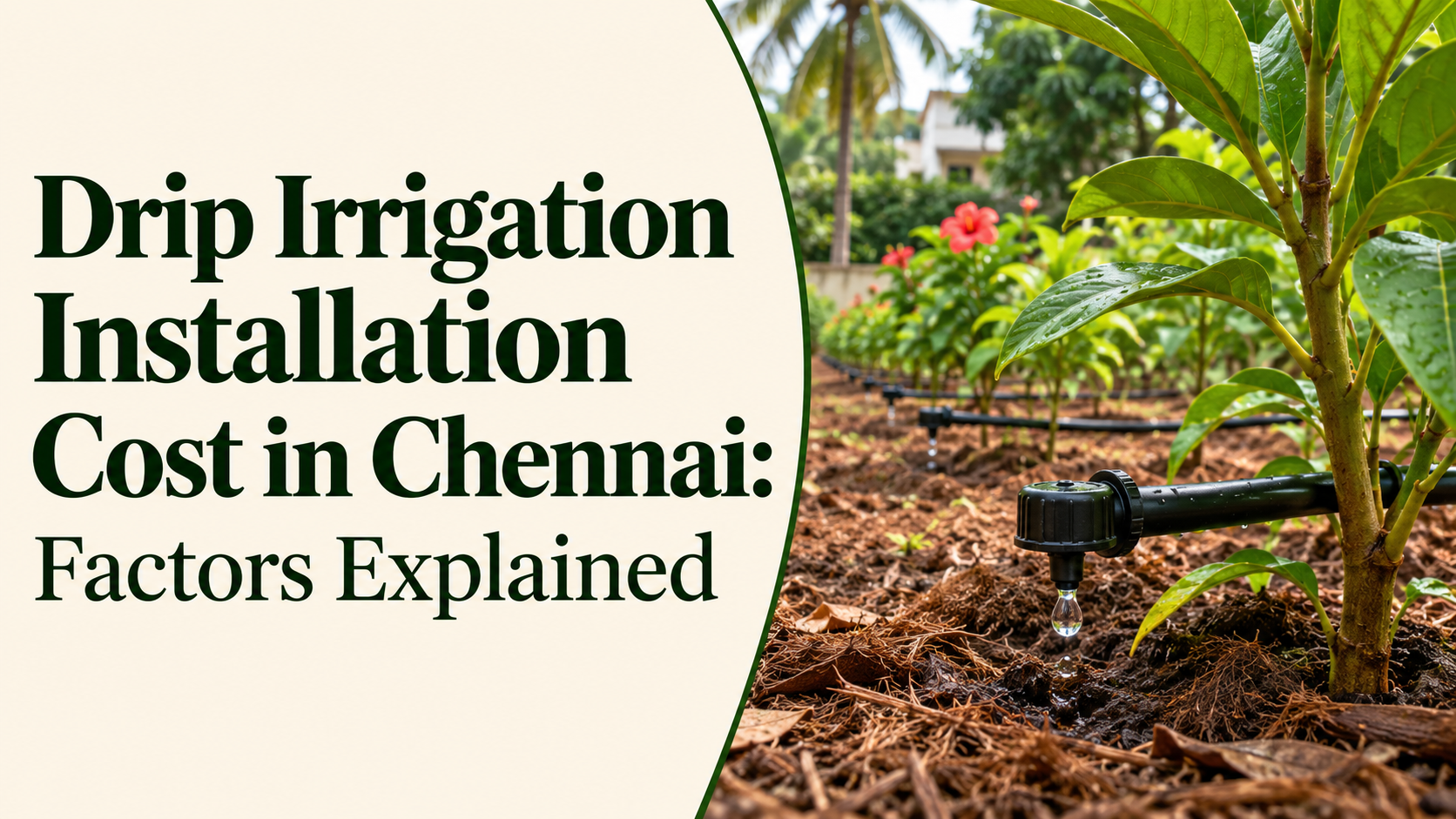
Drip irrigation installation cost in Chennai varies from one property to the next, because no two gardens have the same layout, plants or water supply. A small terrace with a dozen pots and a large villa garden with lawns, hedges and fruit trees need very different systems. This guide explains the factors that decide the price so you know what to expect before a site visit.
In Chennai, drip irrigation is especially useful. Summers are hot and water is often scarce, while the northeast monsoon from October to December brings heavy rain. A well-planned drip system delivers water slowly at the root zone, reduces evaporation and wastage, and can be adjusted between dry and wet seasons.
Key factors in drip irrigation installation cost in Chennai
These are the points we assess on site before preparing a quote.
1. Garden area and plant count
The size of the area and the number of plants decide how much pipe, how many emitters and how much labour is needed. A garden with many scattered pots or beds needs more lateral lines than one with a few long planting rows. Dense hedges, shrubs and trees each need their own emitter arrangement.
2. Number of zones
Plants with different water needs should not share one line. Lawns, flowering beds, potted plants and trees are usually split into separate zones, each with its own valve. More zones give better control but add valves, fittings and wiring if automated. A simple single-zone system costs less but is less precise.
3. Emitter type
The choice of emitters affects both performance and cost:
- Inline drip pipes with built-in emitters for hedges and beds.
- Online button drippers for individual pots and shrubs.
- Pressure-compensating drippers for long runs or uneven levels, so every plant gets the same flow.
- Micro-sprayers or jets for ground covers and dense seasonal beds.
Pressure-compensating and specialised emitters generally cost more than basic ones, but they give more even watering on larger sites and terraces with height differences.
4. Filters and water quality
Drip emitters have very small openings, so a filter is essential. Borewell water in many parts of Chennai carries dissolved salts and fine particles that can clog drippers. Screen or disc filters, and sometimes a pressure regulator, are part of a reliable system. The type and size of the filter depend on your water source and flow, and this influences cost.
5. Timers and automation
A manual system with hand-operated valves is the simplest option. Battery-operated tap timers suit small gardens and terraces. Larger gardens may use a multi-zone controller with solenoid valves, and some clients add rain or moisture sensors so the system skips watering during the monsoon. Each step up in automation adds to the installation cost, but also reduces daily effort and water waste.
6. Water source and pressure
Whether water comes from an overhead tank, a sump with a pump, a borewell or municipal supply changes the design. Low pressure from a tank may need a booster pump or shorter zones; high pressure may need a regulator. Connecting to a rainwater harvesting tank is also possible. You can read more in our guide to rainwater harvesting in Chennai.
7. Pipe routing and concealment
Running pipes along walls and inside beds is quicker than routing them under paving or through finished hardscape. If you want pipes hidden, buried under mulch, or taken across driveways, cutting and restoring surfaces adds labour. Existing gardens may also need careful work around established roots.
8. Terrace vs ground-level gardens
On terraces, the system must be designed around waterproofing, drainage slopes and parapet walls, with pipes clipped neatly so they do not damage the membrane. Ground-level gardens may need trenching. Each setting has its own labour and material needs, which affect the final price.
Drip or sprinkler: which suits your garden?
Drip is ideal for beds, hedges, pots, trees and terrace planters. Lawns usually need sprinklers or pop-up sprays for even coverage. Many Chennai gardens use both: drip for planting zones and sprinklers for turf. Our article on drip vs sprinkler irrigation in Chennai compares the two in detail, and our garden sprinkler installation in Chennai page explains how we set up lawn systems.
Ways to plan a cost-effective drip system
- Group plants with similar water needs into the same zone.
- Plan irrigation before planting or paving, not after.
- Invest in a good filter; it protects every emitter downstream.
- Start with manual valves and add a timer later if needed.
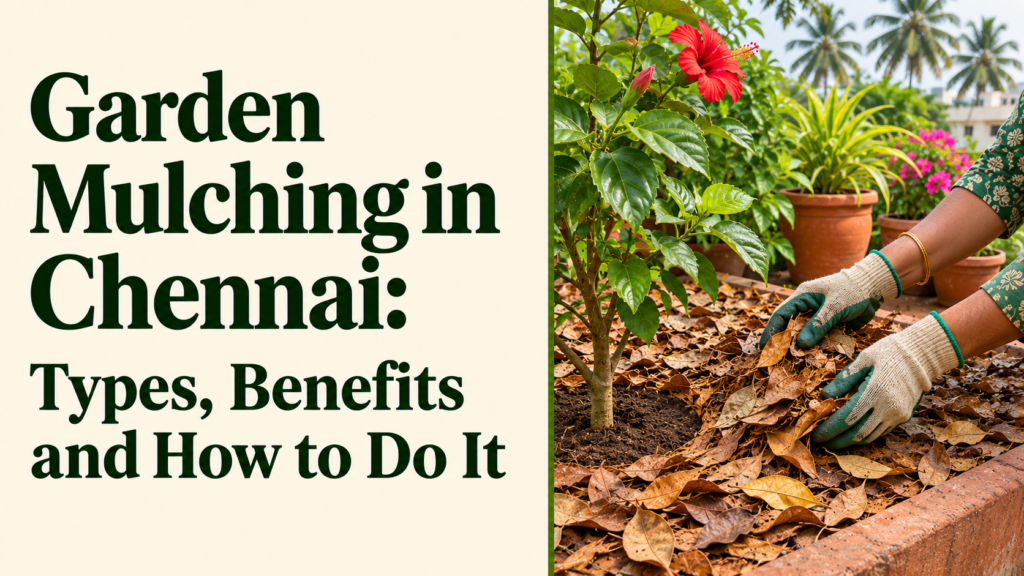
- Use mulch over drip lines to reduce evaporation and protect pipes from sun.
- Schedule a check-up before summer and after the monsoon.
Seasonal watering schedules for Chennai
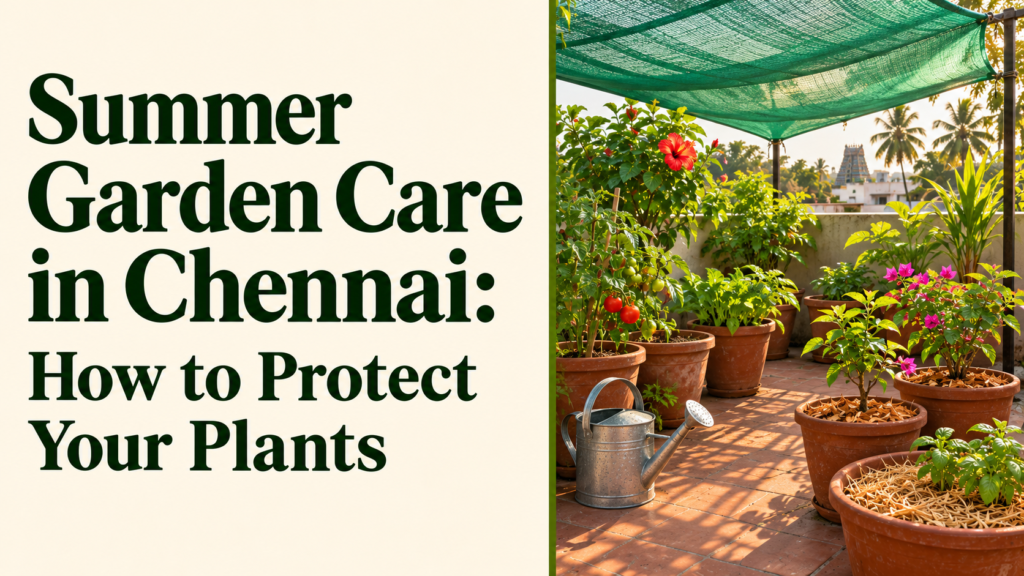
Installing the system is only half the job; setting it correctly through the year protects both your plants and your water bill. In the hot months from March to June, most beds and pots need daily watering, ideally early in the morning so less water is lost to evaporation. Terrace planters in full sun may need a short second cycle in the evening.
When the northeast monsoon arrives, reduce run times sharply or switch zones off on rainy days. Overwatering during this season leads to root rot, fungal problems and waterlogged beds, especially in Chennai clay soils. After the rains, flush the lines, clean the filter and check emitters for silt before returning to the normal schedule. A rain sensor or a quick monthly review of the timer is an easy way to keep this on track.
Common mistakes
- Skipping the filter, which leads to clogged drippers within months.
- Putting lawns and pots on the same zone.
- Running very long lines with non-compensating emitters, so far plants stay dry.
- Leaving timers on full schedule during monsoon rain.
- Exposing thin pipes to direct sun and foot traffic.
- Not flushing lines, allowing silt and algae to build up.
Get your price
We do not publish fixed rates because every garden is different. Prices depend on your site, area, zones, water source and the components you choose, and we share a clear quote after a free site visit. Get a free quote and our team will check your layout, water pressure and plants before recommending a system.
To see how we design and install systems, visit our drip irrigation in Chennai page. For regular upkeep of the whole garden, including irrigation checks, see our garden maintenance services. For general horticulture guidance, Tamil Nadu Agricultural University has useful resources on horticulture.
Frequently asked questions
Is drip irrigation worth it for a small terrace garden?
Yes, for most terraces. Even a small system with a tap timer keeps pots evenly watered, saves water and protects plants when you travel.
Can a drip system be added to an existing garden?
Yes. We route pipes around existing plants and paving. Costs may be slightly higher than a new garden because of careful routing and concealment.
Does a drip system need maintenance?
It needs periodic filter cleaning, line flushing and emitter checks, plus timer adjustments between summer and monsoon seasons.