Home Garden Composting in Chennai: A Beginner’s Guide
Home garden composting in Chennai is one of the simplest ways to turn kitchen scraps and fallen leaves into rich, free fertiliser for your plants. It also cuts down the waste you send out of your home every day. Many families hesitate because they worry about smell, flies or mosquitoes in our hot, humid climate, but with the right method and a few habits, composting works well in independent houses, villas and even small apartments.
This beginner’s guide covers the main composting methods, how to balance greens and browns, apartment-friendly options, how to control pests in humid weather, what to change during the monsoon and how to use the finished compost in your garden.
Why home garden composting makes sense in Chennai
- Better soil: Chennai’s clay and sandy soils both improve with organic matter. Compost loosens clay, helps sandy soil hold water and feeds soil life.
- Healthier pots and terraces: container gardens need regular feeding, and homemade compost is a steady supply.
- Less waste: vegetable peels, tea leaves and garden trimmings become a resource instead of rubbish.
- Water saving: soil rich in compost holds moisture longer, which helps in the dry months before the monsoon.
Compost fits naturally with organic growing. If you want a productive vegetable patch to use it in, see our organic kitchen garden setup service in Chennai.
Greens and browns: the basic recipe
Every compost heap needs two kinds of material in balance:
Greens (nitrogen-rich, moist)
- Vegetable and fruit peels
- Used tea leaves and coffee grounds
- Fresh grass clippings and soft green trimmings
- Cow dung, if available, in small amounts
Browns (carbon-rich, dry)
- Dry leaves, which are plentiful under Chennai’s shade trees
- Shredded newspaper and plain cardboard
- Cocopeat and coconut husk pieces
- Sawdust from untreated wood
A simple rule of thumb is roughly two to three parts browns to one part greens by volume. If the heap is wet and smelly, add browns. If it is dry and nothing is happening, add greens or a little water.
What to keep out
Avoid meat, fish, bones, dairy, oily or heavily spiced cooked food, diseased plants and pet waste. These attract rats and flies and can make compost smell.
Home garden composting in Chennai: choosing a method
Pot method (khamba or stacked pots)
Three terracotta pots stacked on top of each other with holes for air are a popular low-cost system. You fill the top pot, and when it is full you move it down and start a new one. Terracotta breathes, which helps in humid weather. This method suits balconies and small terraces.
Bin method
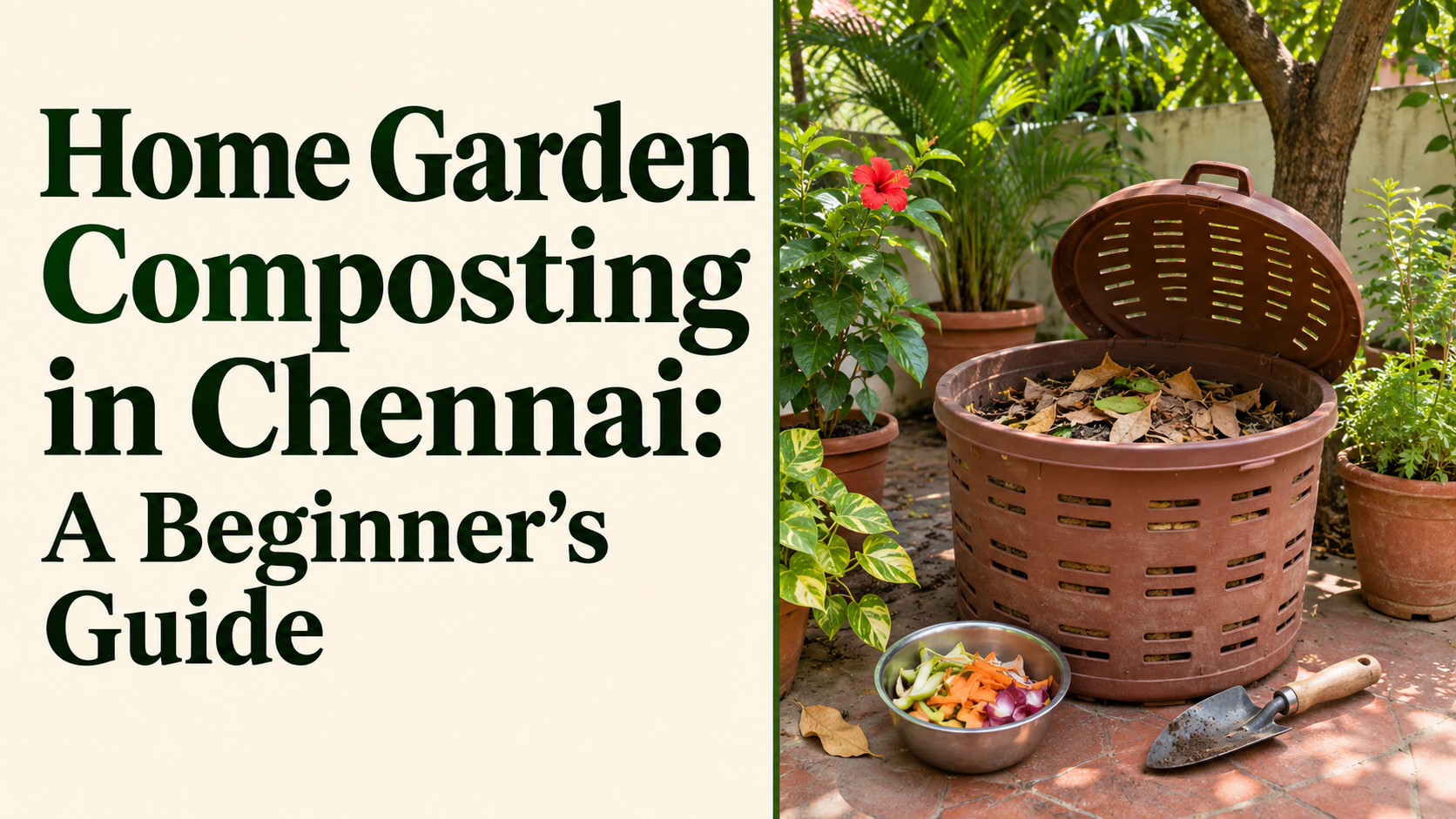
A plastic or metal bin with holes drilled in the sides and base works well for most households. Place it on bricks over a tray to collect liquid. Two bins used alternately make it easier: fill one, let it mature while you fill the other.
Pit method
If you have an independent house or villa with open ground, a shallow pit lined with dry leaves is simple and large. Choose a shaded spot away from walls and the borewell, cover each addition of greens with a layer of dry leaves or soil and keep a lid or board over it during heavy rain. Compost from a pit can be dug into lawns, borders and beds.
Leaf mould heap
Dry leaves alone, kept slightly moist in a wire mesh enclosure or old gunny bags, break down into crumbly leaf mould. It is slower but almost maintenance-free and excellent for potting mix.
Apartment-friendly composting methods
Flat dwellers in Chennai often have only a utility balcony. These options work well in small spaces:
- Stacked terracotta pots or a ready-made home composter kit with a lid.
- Aerobic bins with cocopeat or a dry bulking mix sprinkled over each layer of kitchen waste.
- Bokashi-style fermentation in airtight buckets, followed by burying or adding the fermented waste to a soil bin.
- Community composting in apartment complexes, where a common area handles waste from several flats.
Chop scraps into small pieces, add a handful of browns every time and keep the lid on. Done this way, a balcony composter should smell earthy rather than rotten.
Controlling smell, flies and mosquitoes in humid weather
Chennai’s humidity speeds up decomposition, which is good, but it also means problems show up fast. Most issues have a simple fix:
- Bad smell: usually too many greens and too little air. Mix in dry leaves or shredded paper and turn the heap.
- Fruit flies: always bury fresh scraps under a layer of browns, and keep the lid closed.
- Maggots: often from cooked food or meat. Remove the source, add browns and let the heap heat up.
- Mosquitoes: never allow standing water in trays, lids or pit covers. Empty leachate trays every few days and cover drainage holes with fine mesh.
- Ants: a sign the compost is too dry. Sprinkle water and mix.
Monsoon composting tips
The northeast monsoon brings heavy rain from October to December. Compost heaps can become soggy and anaerobic if they are left uncovered.
- Cover pits and open heaps with a sloped sheet or lid so rain runs off.
- Add more browns than usual, as kitchen waste is already wet.
- Raise bins on bricks so they do not stand in water.
- Collect and store dry leaves in sacks before the rains, so you have browns ready.
- Check that leachate trays do not overflow and breed mosquitoes.
For more on preparing your outdoor spaces for the rains, read our pre-monsoon garden checklist for Chennai.
How to know when compost is ready
Finished compost is dark brown, crumbly and smells like forest soil. You should not be able to recognise most of the original material. In Chennai’s warm climate, a well-managed bin or pit may be ready in roughly two to three months, while leaf mould takes longer. Sieve it, return large pieces to the next batch and let the finished compost rest for a week or two before using it around delicate seedlings.
Using compost in your garden
- Potting mix: blend compost with cocopeat and a little soil for terrace pots and grow bags.
- Raised beds: mix a generous layer into the top of beds before each planting season. See our guide to raised bed gardening in Chennai.
- Top dressing: spread a thin layer around shrubs, fruit trees and flowering plants every few months.
- Herbs and medicinal plants: tulsi, mint, karpooravalli and aloe vera all respond well to compost. Our medicinal garden setup service in Chennai uses compost-rich beds.
- Lawns: sieve fine compost and spread it thinly over the grass, then water.
For background on organic growing practices, the overview of organic horticulture is a helpful starting point.
Common mistakes beginners make
- Adding only kitchen waste and no browns, which leads to a slimy, smelly heap.
- Putting in cooked food, dairy or meat.
- Leaving pits uncovered during the monsoon.
- Letting water stand in trays and lids, which breeds mosquitoes.
- Using half-finished compost directly on seedlings.
- Giving up after the first smell, instead of correcting the balance.
Let Win Landscape help you grow with compost
Composting is the first step towards a healthier, more self-sufficient garden. Win Landscape has designed and built gardens across Chennai since 2002, including kitchen gardens, terrace gardens and medicinal gardens with compost corners built into the plan. Explore our organic kitchen garden service or contact us for a free site visit and consultation.
Frequently asked questions
Will composting at home make my flat smell?
A well-balanced composter with enough dry browns and a closed lid smells earthy, not rotten. If you notice a bad smell, add dry leaves or shredded paper and mix to let air in.
How long does compost take in Chennai?
In warm weather, a properly managed bin or pit can be ready in about two to three months. Leaf mould and larger pieces take longer.
Can I compost during the monsoon?
Yes. Cover heaps and pits, raise bins off the ground, add extra browns and make sure no water stands in trays or lids to avoid mosquitoes.