Potting Mix for Terrace Gardens: The Right Recipe for Chennai
Potting mix for terrace gardens decides whether your rooftop plants thrive or struggle. In Chennai, where terraces bake in the sun for most of the year and then take heavy northeast monsoon rain from October to December, the mix inside each pot or grow bag has to do three jobs at once: stay light, hold moisture and drain fast. Ordinary garden soil does none of these well on a roof.
This guide explains how to build a lightweight potting mix for terrace gardens, which ingredients to use, sample ratios as general guidance, and how to adjust the recipe for vegetables, flowers, succulents and small trees in containers. If you are planning a full rooftop setup, our terrace garden installation service in Chennai covers waterproofing checks, containers, irrigation and planting together.
Why heavy soil is a problem on Chennai terraces
Many first-time terrace gardeners fill pots with red soil or garden earth dug from the ground. It looks natural, but it causes several problems on a roof:
- Weight: wet soil is very heavy. Dozens of large pots filled with soil add a significant load to the slab, which is a concern for older buildings.
- Compaction: Chennai has a lot of clay-rich soil. In a pot, it packs down after a few waterings, roots struggle for air and water sits on top.
- Poor drainage in monsoon: compacted soil stays waterlogged after heavy rain, leading to root rot, fungus gnats and yellowing leaves.
- Cracking in summer: clay shrinks and cracks when dry, so water runs straight down the sides of the pot instead of soaking in.
A good potting mix replaces most of that soil with lighter, airier ingredients. The result is a medium that weighs less, drains freely and still holds enough moisture to get plants through a hot afternoon.
Core ingredients of a lightweight potting mix
Most terrace gardeners in Chennai work with a small set of ingredients that are easy to find at local nurseries and garden stores.
Cocopeat
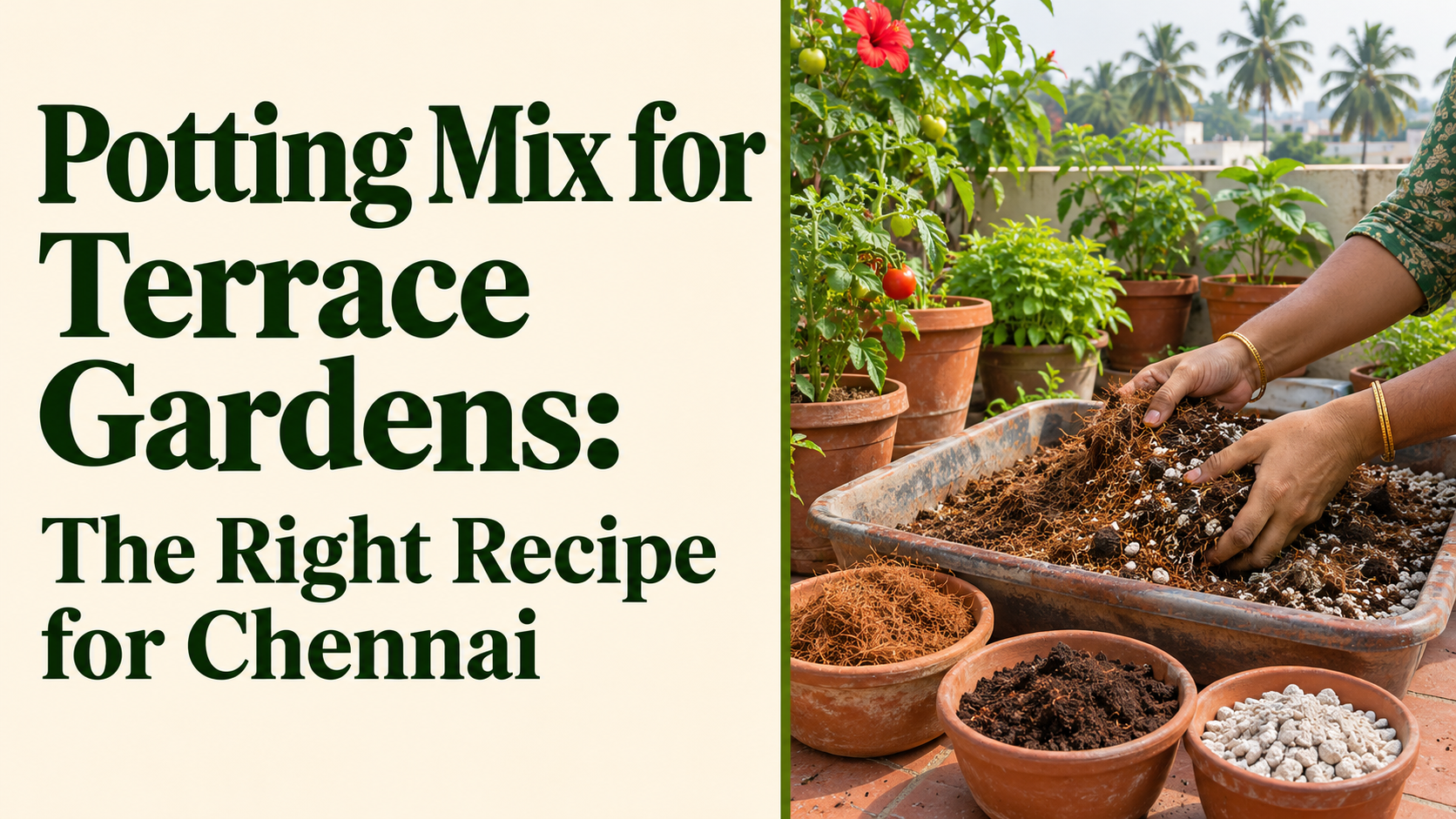
Cocopeat (coir pith) is the backbone of most rooftop mixes. It is light, holds water like a sponge and does not compact easily. Buy washed or low-EC cocopeat, or rinse compressed blocks well before use, because unwashed coir can carry salts that harm young roots. Cocopeat has almost no nutrients of its own, so it must be combined with compost.
Compost and vermicompost
Well-rotted compost and vermicompost supply nutrients and beneficial microbes. Vermicompost is finer and richer; leaf or kitchen compost adds bulk and structure. Always use fully decomposed material that smells earthy, not sour. If you want to make your own, read our beginner’s guide to home garden composting in Chennai.
Perlite
Perlite is a white, very light volcanic material that creates air pockets and improves drainage. It is especially useful for succulents, herbs and any pot that sits where rain collects.
Coarse sand
River sand or coarse sand improves drainage for cacti and succulents. Use it in small amounts because it adds weight. Avoid fine beach sand, which carries salt and packs tightly.
Garden soil (a small share)
A small portion of good garden soil gives the mix some body, holds nutrients and helps larger plants anchor. On terraces, keep this share low.
Optional additions
- Neem cake powder, used sparingly, is a traditional addition many gardeners use for soil health.
- Bone meal or rock phosphate for flowering and fruiting plants, following pack directions.
- Rice husk or crushed dry leaves for extra air and lightness.
Potting mix for terrace gardens: recipes by plant type
The ratios below are general guidance by volume (for example, buckets), not fixed rules. Adjust them based on how your plants respond, how much sun your terrace gets and how often you can water.
Vegetables and leafy greens
Vegetables are hungry feeders and need steady moisture. A common starting point is roughly 40% cocopeat, 30% compost or vermicompost, 20% garden soil and 10% perlite. Tomatoes, brinjal, chillies, beans and greens like amaranthus and palak do well in a mix like this when grown in grow bags or raised containers. For planning beds and crops, see our guide to raised bed gardening in Chennai.
Flowering plants
Hibiscus, jasmine, ixora, roses and periwinkle prefer a slightly firmer mix. Try about 35% cocopeat, 30% compost, 25% garden soil and 10% perlite or coarse sand. Add bone meal at planting for better blooms.
Succulents and cacti
These plants hate wet roots, which is a real risk on a Chennai terrace in November. Use a gritty mix such as 30% cocopeat, 30% coarse sand, 30% perlite and 10% compost. Choose pots with large drainage holes and keep them where rainwater will not pool.
Small trees and shrubs in large pots
Lemon, guava, curry leaf, bougainvillea and dwarf ornamentals stay in the same pot for years, so the mix needs more structure. Try 30% garden soil, 30% cocopeat, 30% compost and 10% perlite. Use containers with wide bases for stability in wind, and place heavy pots near columns or the edges of beams rather than in the middle of a slab, after checking with a structural engineer where needed.
For ideas on which species suit rooftop conditions, read our list of terrace garden plants for Chennai.
How to mix and fill containers
- Prepare cocopeat: soak compressed blocks in water, let them expand, then rinse and squeeze out excess water.
- Combine dry and moist ingredients: spread everything on a tarpaulin and mix by hand or with a shovel until the colour is even.
- Check moisture: squeeze a handful. It should hold shape briefly and then crumble, not drip.
- Add a drainage layer only if needed: a thin layer of pebbles or broken terracotta over the hole stops mix washing out, but do not fill the bottom third with stones as it raises the water table inside the pot.
- Fill and settle: fill to about 3 cm below the rim, water gently and top up after the mix settles.
The same principles apply to smaller spaces. If you are working with railings and limited floor area, our balcony garden setup service in Chennai uses compact versions of these mixes.
Refreshing potting mix over time
Potting mix does not last forever. Compost gets used up, cocopeat breaks down and roots fill the container. Signs it is time to refresh include water running straight through, a mix that has shrunk well below the rim, roots circling the bottom and plants that stay pale despite feeding.
- Top dressing: every two to three months, scrape off the top few centimetres and add fresh compost or vermicompost.
- Partial refresh: for seasonal vegetables, remove old roots after harvest, mix in fresh compost and some new cocopeat, and replant.
- Full repotting: for long-term plants, repot every one to two years, gently loosening roots and replacing most of the old mix.
Old mix need not be wasted. Sieve out roots, sun it for a few days and blend it into your compost pile or reuse it with fresh compost.
Monsoon drainage tips for terrace pots
The northeast monsoon is the hardest test for any potting mix in Chennai. Heavy, repeated rain can drown roots and block terrace drains.
- Raise pots on stands, bricks or pot feet so water flows out freely and does not sit against the waterproofing.
- Clear drainage holes before October and check that no saucers are collecting water.
- Keep terrace outlets free of spilled mix, leaves and cocopeat fibres.
- Move succulents and rain-sensitive plants under a shade or covered area during long wet spells.
- Reduce watering during the rainy season; feel the mix with a finger before adding water.
For a complete seasonal routine, see our pre-monsoon garden checklist for Chennai.
Feeding plants in a soilless mix
Because a light terrace mix contains little soil, it holds fewer nutrients than the ground. Plan to feed regularly:
- Add a handful of vermicompost per pot every few weeks during the growing season.
- Use diluted liquid organic feeds such as compost tea, following product guidance.
- Mulch the surface with dry leaves or coco chips to slow evaporation in summer.
Organic growing methods are well documented by horticulture resources such as the TNAU Agritech horticulture portal, which is a useful reference for Tamil Nadu conditions.
Common mistakes with terrace potting mix
- Filling large pots entirely with garden soil, which adds weight and compacts.
- Using unwashed cocopeat straight from the block.
- Adding fresh, uncomposted manure or kitchen waste directly to pots.
- Using the same mix for succulents and vegetables.
- Placing saucers under pots during the monsoon and forgetting to empty them.
- Never refreshing the mix and wondering why plants decline after a year.
Get expert help with your terrace garden
Getting the potting mix right is one part of a healthy rooftop garden; waterproofing, load, drainage, containers and irrigation all matter too. Win Landscape has been building gardens across Chennai since 2002, and our team can recommend mixes and planting plans for your terrace after a site visit. Explore our terrace garden installation service or contact us for a free site visit and consultation.
Frequently asked questions
Can I use only cocopeat for terrace pots?
Cocopeat alone holds water well but has almost no nutrients. Mix it with compost or vermicompost, and add some perlite or a little soil for structure, so plants get both food and air.
How often should I change the potting mix?
Top dress with fresh compost every two to three months, refresh seasonal vegetable pots after each crop, and repot long-term plants every one to two years or when roots fill the container.
Is potting mix lighter than soil for my terrace?
Yes. A cocopeat-based mix with compost and perlite is considerably lighter than garden soil, especially when wet, which reduces the load on your terrace slab. For heavy installations, consult a structural engineer.