Water Features for Chennai Homes: Ponds, Fountains and Waterfalls
Water features for Chennai homes bring movement, sound and a sense of calm to gardens, courtyards, terraces and entrances. The gentle sound of water can soften traffic noise, attract birds and create a natural focal point. With the right design, water features for Chennai homes can also be practical, safe and easy to look after in a hot, humid climate where water is precious.
In this guide, Win Landscape compares the main types of water features, explains what works in Chennai conditions and shares the mistakes to avoid.
Types of water features for Chennai homes
1. Garden ponds
Ponds create a natural, peaceful setting and can hold fish and aquatic plants such as water lilies and lotus. They suit larger gardens and villas with space for a planted edge. A well-designed pond uses a liner or waterproofed concrete, a pump and filter, and a balanced mix of plants to keep water clear. For upkeep tips, read our guide to garden pond maintenance in Chennai.
2. Fountains
Fountains range from a simple bubbling urn to tiered stone designs and modern jets. They work in small gardens, courtyards and entrances. Self-contained fountains recirculate water from a hidden reservoir, which saves water and makes them easy to install.
3. Waterfalls and cascades
Waterfalls use natural or artificial rock to create flowing water over levels. They add drama to sloping gardens or the edge of a pond, and the sound can be adjusted with pump size and the shape of the spill edge.
4. Water walls
Water walls send a thin sheet of water down stone, glass or metal. They suit contemporary homes, lobbies and compact spaces where floor area is limited.
5. Reflecting pools and water bowls
Shallow, still water surfaces reflect sky and planting. A large stone or metal bowl can be a simple, elegant feature for terraces and balconies.
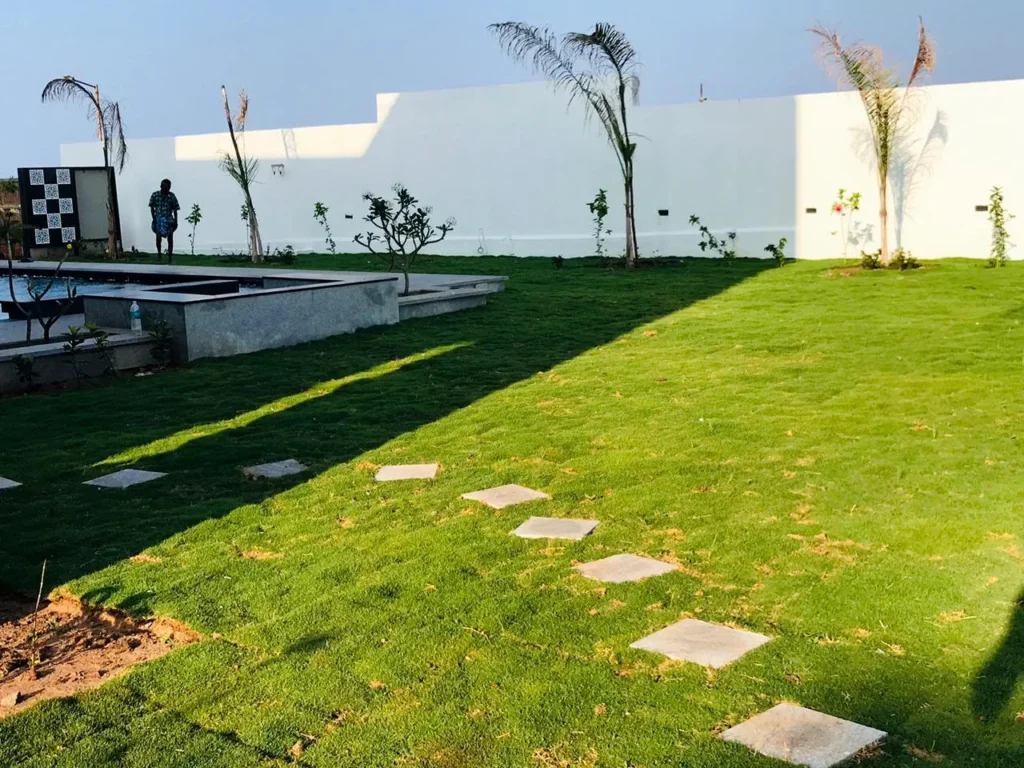
Designing water features for Chennai’s climate
Chennai’s heat, monsoon rain and water scarcity all affect design:
- Recirculation: all features should recirculate water through a pump to reduce wastage.
- Evaporation: in summer, water evaporates quickly. Partial shade, smaller surface areas and auto top-up systems help.
- Monsoon overflow: ponds and basins need an overflow outlet so heavy rain does not flood the surrounding garden.
- Algae control: heat and sunlight encourage algae. Filters, UV clarifiers where appropriate, aquatic plants and shade keep water clearer.
- Coastal homes: choose materials and fittings that resist salt and humidity.
Mosquito control
Many people worry that a water feature will attract mosquitoes. Moving water is far less attractive to mosquitoes than still water, so pumps should run regularly. In ponds, small fish that eat larvae help, and reflecting pools can be designed with gentle circulation. Regular cleaning and avoiding stagnant corners are key.
Safety considerations
- Keep pond depths shallow or add safety grills where children or pets play
- Use slip-resistant stone around edges
- Install pumps and lights with outdoor-rated, earthed electrical connections and a safety breaker
- Place features where they are visible from the house
Choosing the right feature for your space
- Small front yard or courtyard: a self-contained fountain or water bowl.
- Villa garden: a pond with a small cascade, planted edges and lighting.
- Modern home or lobby: a water wall or reflecting pool.
- Terrace: a lightweight bowl or compact fountain, after checking waterproofing and load.
- Sloping garden: a natural rock waterfall.
A water feature works best when it is part of an overall design with paving, planting and lighting. See our garden lighting ideas for ways to highlight water at night, and our villa garden landscaping article for whole-garden planning.
Maintenance basics
- Clean pump intakes and filters regularly
- Remove fallen leaves and debris, especially before and during the monsoon
- Top up water during hot months
- Trim aquatic plants so they do not crowd the surface
- Check lights, cables and connections for safety
We can include water features in our garden maintenance plans so they stay clean and running.
What affects the cost
We do not publish fixed prices. Cost depends on the type and size of the feature, construction method, stone and finishes, pump and filtration, lighting, electrical work and site access. We visit the site, discuss options and share an itemised quotation.
Common mistakes
- Undersized pumps or filters. Water turns green and cloudy quickly.
- No overflow. Monsoon rain floods the surrounding area.
- Full sun on shallow water. This increases evaporation and algae.
- Unsafe wiring. All electrical work near water must be outdoor-rated and protected.
- Placing the feature out of sight. A water feature should be enjoyed from seating areas or windows.
- Leaving pumps off for long periods. Still water becomes stagnant and attracts mosquitoes.
Making the most of sound and light
The sound of water changes with height and flow. A low bubble suits a quiet reading corner, while a cascade can help mask road noise near a gate. Adjustable pumps let you tune the sound. At night, submerged or uplighting turns water into a glowing feature that can be enjoyed from indoors. Warm-white, low-voltage fittings create a calm mood without glare.
How we plan a water feature project
- Site visit: we study the space, sunlight, views from the house, water source, power supply and drainage.
- Concept: we suggest the type, size and style of feature that suits your home and how you want to use the garden.
- Technical planning: we size the pump and filter, plan overflow and drainage, and decide on lining or waterproofing.
- Construction: excavation, waterproofing, stonework, plumbing and electrical work are completed and tested.
- Planting and finishing: aquatic and edge planting, lighting and surrounding paving complete the feature.
- Handover: we explain cleaning, top-up and pump care, and offer ongoing maintenance.
For more on the history and types of water features, see the water feature article on Wikipedia.
Thinking about a pond, fountain or water wall? Explore our water feature contractors in Chennai service or contact Win Landscape to book a free site visit. Call +91 94448 64732 and we will help you choose the right feature for your home.
Frequently asked questions
Do water features waste a lot of water?
Recirculating features reuse the same water. You only need to top up what evaporates or splashes, which is more in summer.
Can I have a water feature on my terrace?
Yes, usually a lightweight fountain or bowl, after checking waterproofing and the load the terrace can carry.
How do I keep pond water clear in Chennai?
Use a correctly sized pump and filter, add aquatic plants, provide some shade and clean debris regularly.