Garden Mulching in Chennai: Types, Benefits and How to Do It
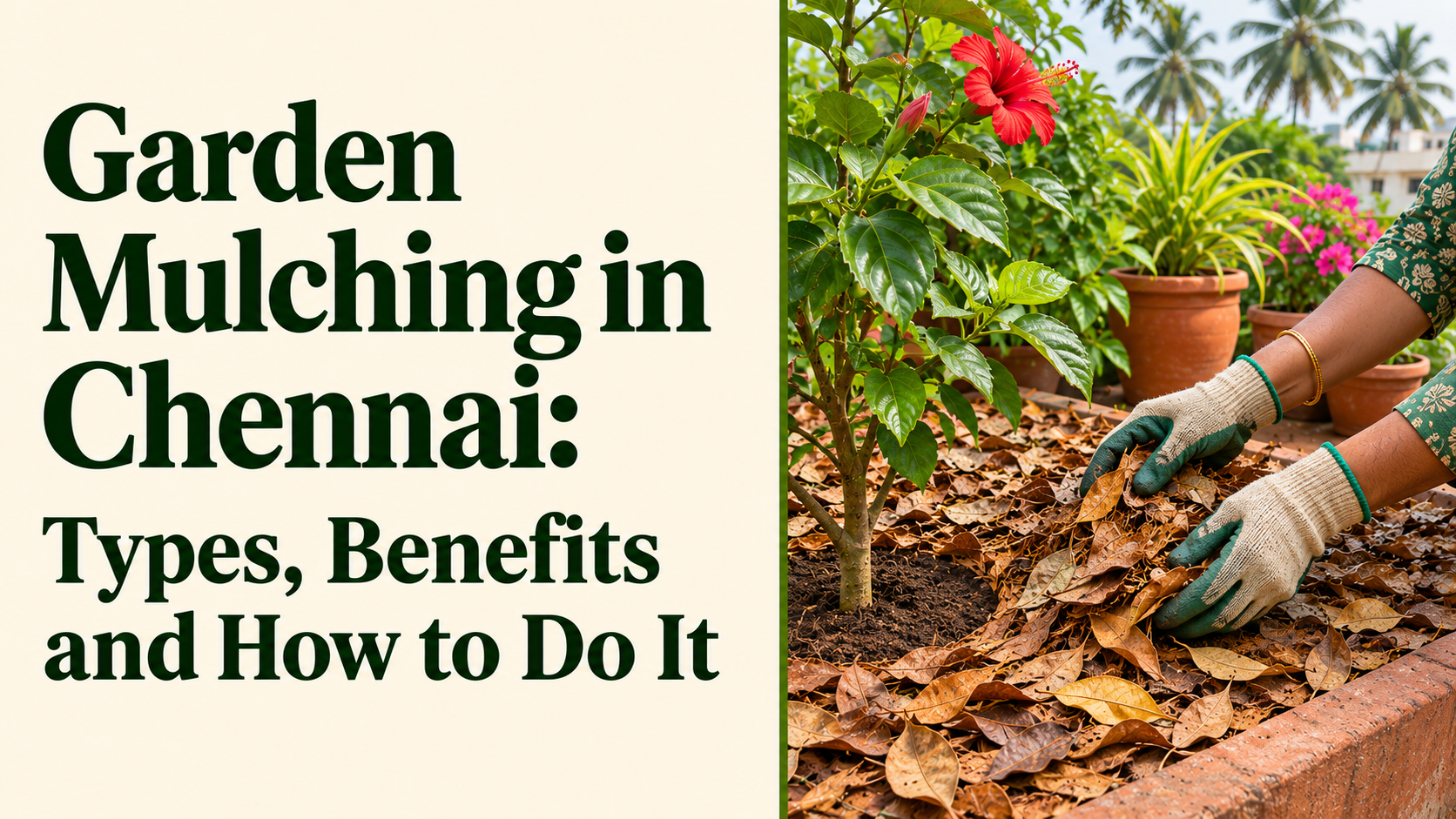
Garden mulching in Chennai is one of the most effective and least expensive ways to keep plants healthy through hot summers and heavy monsoons. Mulch is simply a layer of material spread over the soil surface. It protects roots from the sun, holds moisture, suppresses weeds and, in the case of organic mulch, slowly feeds the soil as it breaks down.
This guide explains the main types of mulch available locally, their benefits, how thick to lay them, how to use them safely during the monsoon and where mulch works best in a home or commercial garden.
Why garden mulching matters in Chennai
Chennai’s climate is hard on bare soil. Strong sun from March to June dries the top layer quickly and heats roots, while heavy northeast monsoon rain from October to December can wash away topsoil and compact clay beds. Mulch acts as a buffer against both extremes.
- Moisture retention: mulch slows evaporation, so beds stay moist for longer between waterings, which matters in water-scarce months.
- Weed control: a thick layer blocks light to weed seeds, reducing hand weeding.
- Soil temperature: roots stay cooler in summer and the soil temperature stays steadier overall.
- Soil protection: mulch reduces splash and erosion during heavy rain and stops a hard crust forming on clay.
- Soil improvement: organic mulches break down into humus and feed soil life.
- Neat appearance: mulched beds look finished and tidy.
Organic mulch options
Organic mulches come from plant material and decompose over time. They need topping up, but they improve the soil as they go.
Dry leaves
Free and plentiful under trees in most Chennai neighbourhoods. Shred or crush them slightly so they do not mat together. Ideal for kitchen gardens, shrub borders and around trees.
Coco husk and coco chips
Coconut husk pieces and chips are widely available, hold moisture well and last longer than leaves. They suit potted plants, terrace gardens and ornamental beds. Rinse them before use to remove excess salts.
Wood chips and bark
Wood chips give a natural, finished look in landscaped beds and under trees. They break down slowly and are good for paths between beds. Use well-aged chips where possible, and keep them away from building walls because of termite risk.
Straw and dry grass
Paddy straw or dry grass clippings are excellent for vegetable beds. They are light, easy to spread and decompose within a season. Make sure grass clippings are dry and free of weed seeds before using them.
Inorganic mulch options
Inorganic mulches do not break down and need less replacement, but they do not feed the soil.
Pebbles and river stones
Pebbles suit succulents, cactus beds, dry gardens, water feature edges and modern landscapes. They allow rain to drain through quickly. In full sun, stones can radiate heat, so they are better around tough, heat-tolerant plants.
Gravel and stone chips
Gravel works well for paths, side passages, under benches and in low-maintenance zones. A weed-control fabric beneath it keeps it clean longer and stops it sinking into the soil.
How thick should garden mulch be?
Getting the depth right is important. Too thin and weeds come through; too thick and roots can struggle for air.
- Fine organic mulch (dry leaves, straw): roughly 5 to 8 cm, as it settles quickly.
- Coco chips and wood chips: roughly 5 to 7 cm.
- Pebbles and gravel: roughly 3 to 5 cm over weed fabric.
- Pots and grow bags: a thinner layer of 2 to 3 cm is usually enough.
How to do garden mulching in Chennai step by step
- Weed first: remove existing weeds, including roots, so they do not grow through the mulch.
- Improve the soil: loosen the top layer and add compost if the bed is tired.
- Water deeply: mulch is best laid over moist soil, as it locks the moisture in.
- Spread evenly: lay the mulch to the right depth across the bed.
- Keep it off stems: leave a gap of a few centimetres around plant stems and tree trunks to prevent rot and pest damage.
- Top up: check every few months and refresh organic mulch as it thins.
Monsoon caution: fungus and termites
Mulch is helpful during the rains, but a few precautions prevent problems in Chennai’s wet season:
- Thin it out before heavy rain: very thick organic mulch can stay soggy and encourage fungus, slugs and snails.
- Keep mulch away from stems: wet mulch against bark can cause collar rot.
- Watch for termites: wood chips and dry leaves near walls and wooden structures can attract termites. Keep a clear strip next to the building.
- Check drainage: mulch should never block garden drains or channels. Read our guide to garden drainage in Chennai for more.
- Prefer coarser mulch: coco chips and pebbles drain better than fine leaf litter in waterlogged areas.
Where to use mulch in your garden
- Around trees and shrubs: a mulch ring helps young trees establish and protects them from mower damage.
- Kitchen gardens and raised beds: straw and leaves keep vegetable roots cool and moist.
- Backyard borders: organic or decorative mulch ties planting beds together. See our backyard garden design service in Chennai.
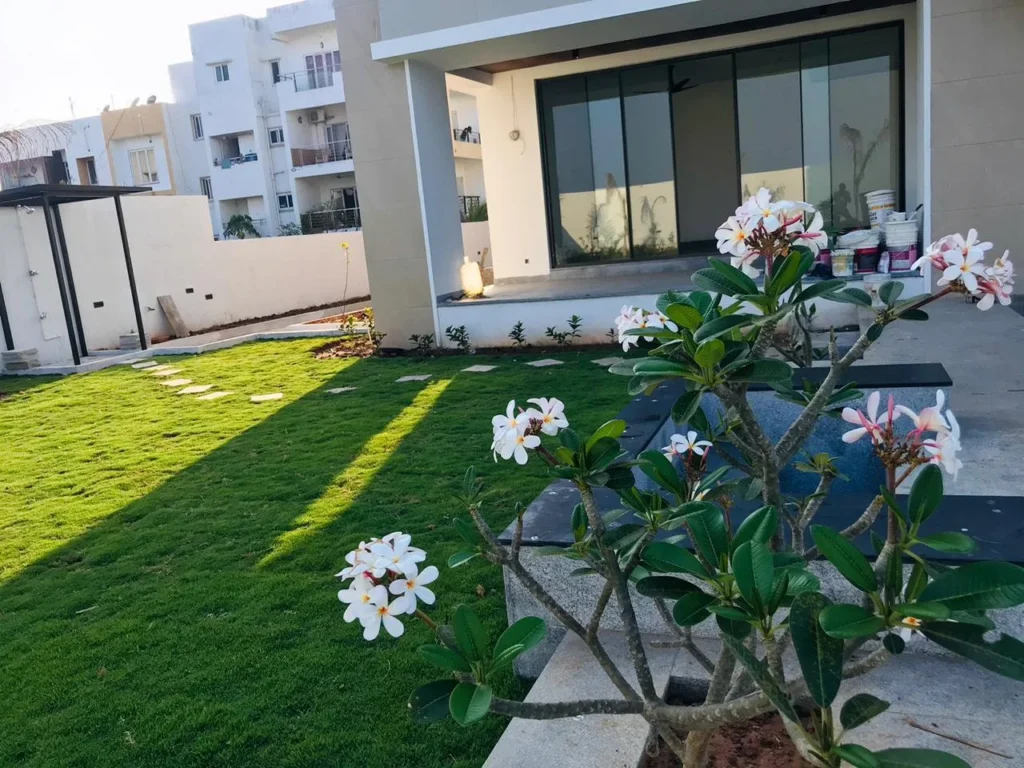
- Front yards: pebbles or bark give a neat, low-maintenance finish near entrances and car parking. Explore our front yard landscaping service in Chennai.
- Terrace and balcony pots: coco chips reduce how often pots need watering.
- Paths and side passages: gravel over weed fabric for clean, walkable areas.
Mulch is a standard part of good landscaping practice worldwide, and it is especially useful in tropical climates like ours. It is also a key step in our summer garden care guide for Chennai.
Common mistakes with garden mulching
- Piling mulch against stems and trunks in a volcano shape.
- Laying mulch over dry soil or over living weeds.
- Using fresh, green wood chips straight from cutting.
- Spreading mulch too thick in shady, wet areas during the monsoon.
- Leaving wood mulch touching walls or wooden structures.
- Using pebbles around plants that dislike heat.
Get professional mulching with Win Landscape
Win Landscape has designed and maintained gardens across Chennai since 2002. Our maintenance teams choose the right mulch for each part of your garden, lay it correctly and refresh it through the year. Explore our garden maintenance services in Chennai or contact us for a free site visit and consultation.
Frequently asked questions
What is the best mulch for Chennai gardens?
Dry leaves and coco chips are practical, locally available choices for most beds. Pebbles suit succulents and low-maintenance zones. The best choice depends on the plants, the look you want and how much upkeep you can manage.
How often should mulch be replaced?
Fine organic mulches like leaves and straw need topping up every few months. Coco chips and wood chips last longer. Pebbles and gravel need only occasional cleaning and levelling.
Should I remove mulch during the monsoon?
You do not need to remove it, but thin out very thick organic layers, keep mulch away from stems and walls, and make sure it is not blocking drains.