Residential Landscape Design Ideas for Chennai Homes
Residential landscape design shapes how a home feels every single day: the walk from the gate to the door, the shade over a sit-out, the view from the living room window and the space where children play. In Chennai, good design also has to cope with intense heat, humidity, a heavy northeast monsoon and pressure on water. The result should look beautiful, but it must also work hard in this climate.
This article shares practical residential landscape design ideas for Chennai homes, from compact independent houses to large villas, and explains how to bring them together into a garden that lasts.
Start with how you want to use the space
Before choosing plants or paving, list how your family will actually use the garden. Common goals we hear on site visits include:
- A shaded sit-out for morning coffee or evening conversation.
- A lawn or soft area for children and pets.
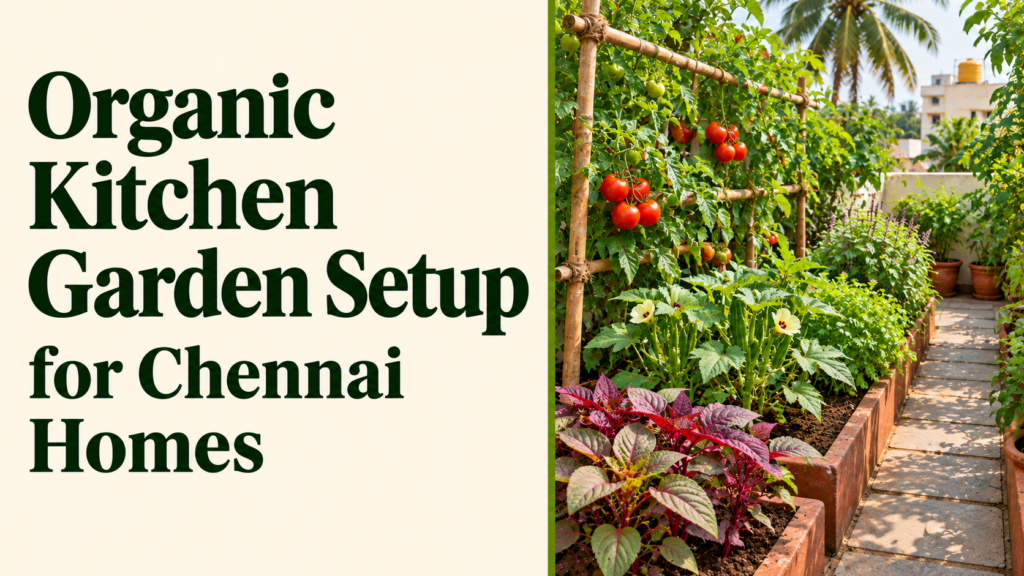
- A kitchen garden for greens and herbs.
- Privacy from the road or neighbouring buildings.
- Low upkeep, because weekends are already busy.
Each goal becomes a zone in the plan. Linking them with paths and sightlines is what turns a collection of features into a coherent design.
Residential landscape design ideas for Chennai homes
1. Layered planting for shade and privacy
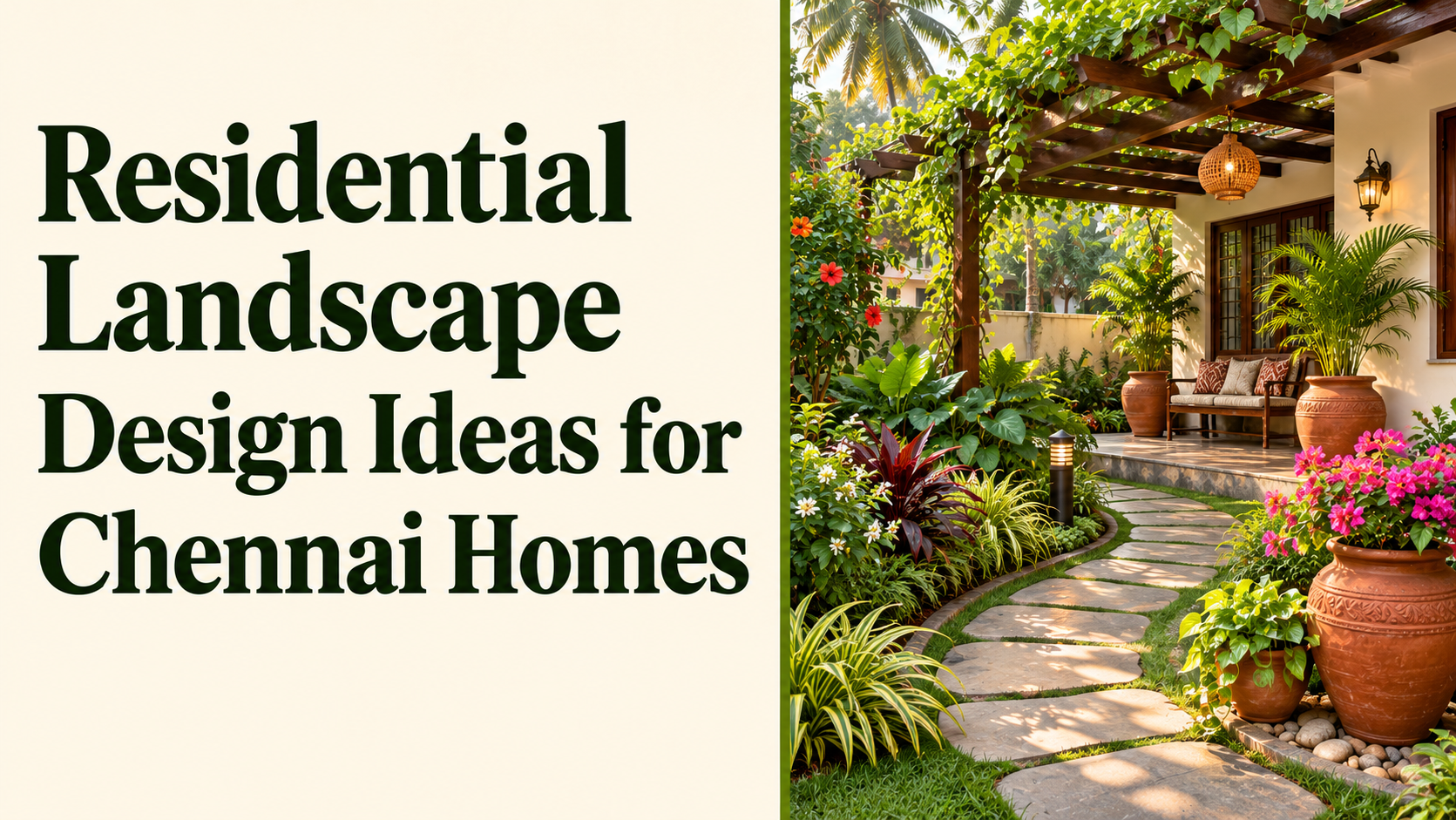
Use a mix of heights: shade trees at the back or along boundaries, shrubs and hedges in the middle, and groundcovers or flowering perennials at the front. Layering softens compound walls, cools the ground and screens views without feeling closed in. Native and well-adapted species reduce watering; see our list of native plants for Chennai gardens and the best shade trees for Chennai.
2. A defined entrance path
A clear, well-lit path from gate to door sets the tone for the whole property. Natural stone, cobbles or stepping stones set in pebbles all suit Chennai homes. Choose non-slip finishes that stay safe in the rain.
3. An outdoor room
A pergola or covered sit-out with seating walls creates a usable living space outdoors. Climbers such as bougainvillea or jasmine on the pergola add colour and filtered shade. Our guide on pergola design for Chennai gardens covers materials that resist humidity.
4. A small water feature
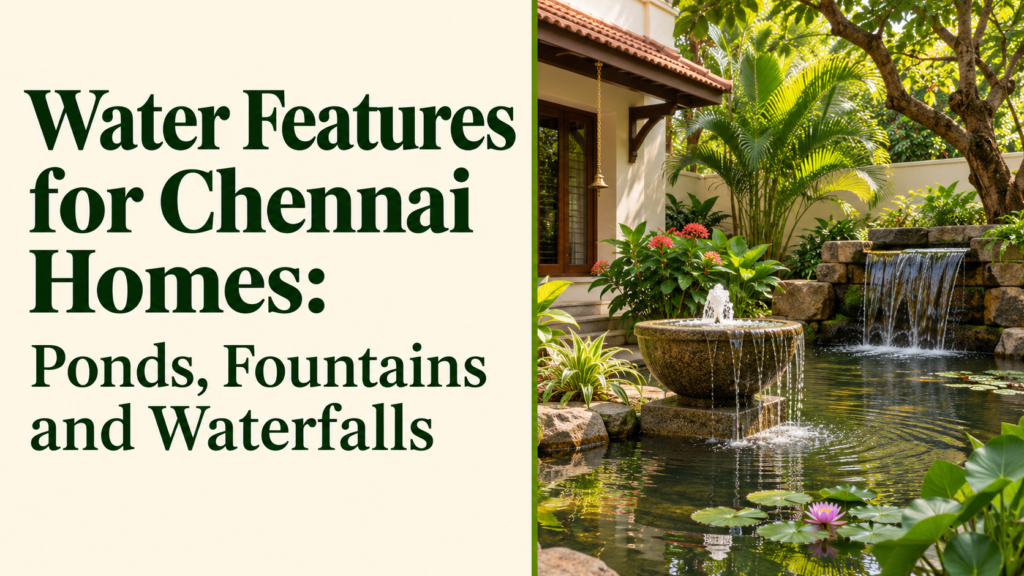
Even a compact wall fountain or bowl feature adds sound and a sense of calm, and helps mask traffic noise. Keep it close to the sit-out so you enjoy it daily.
5. Lawn where it earns its place
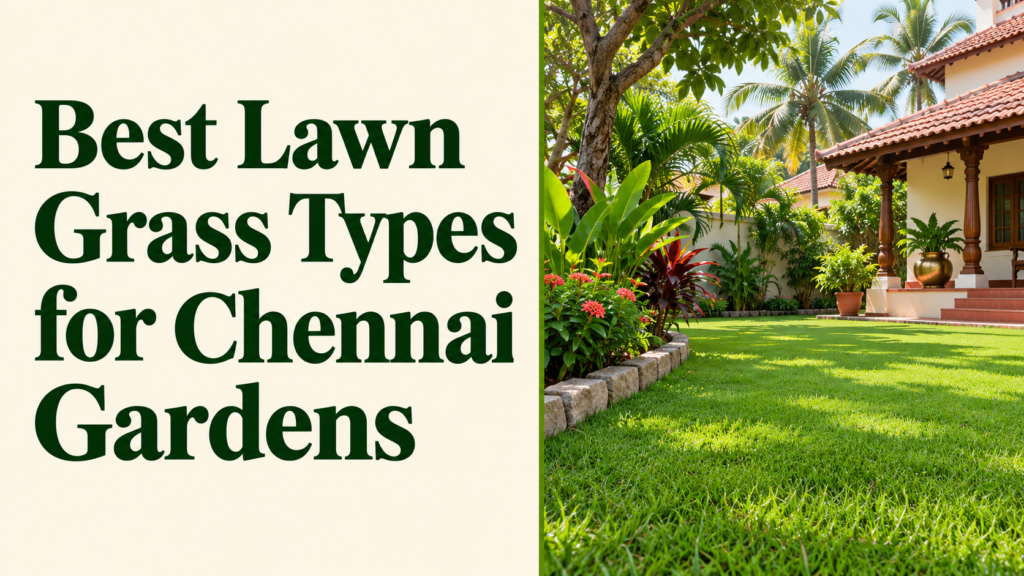
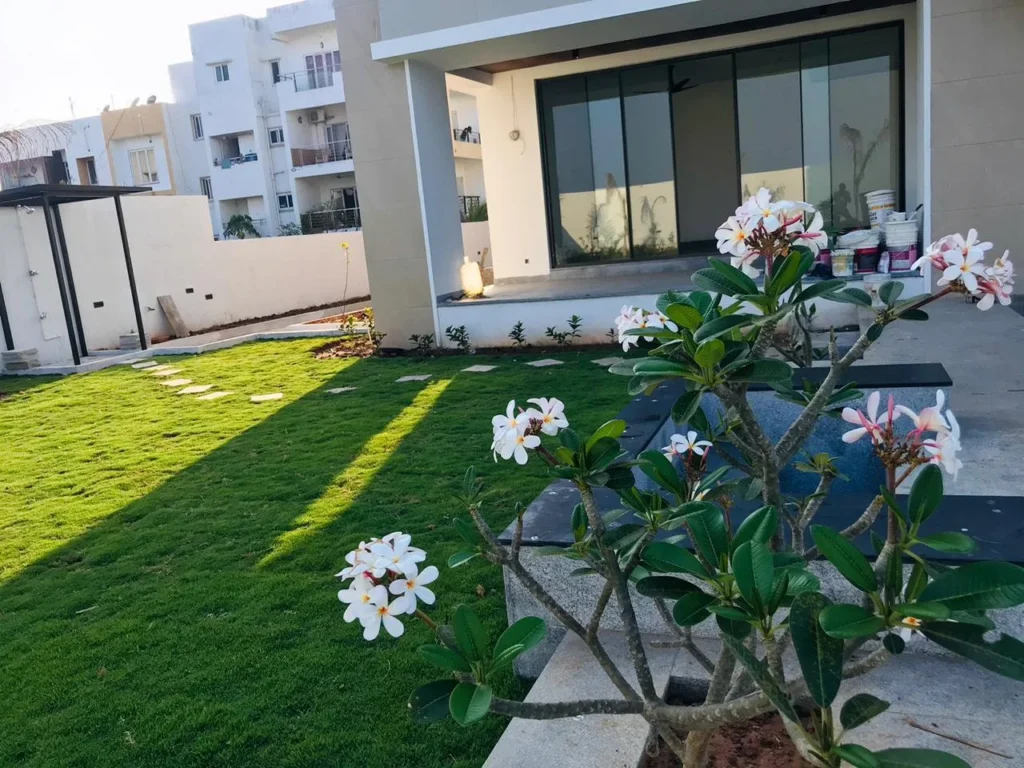
Lawns look lovely but need water and regular mowing. Limit turf to areas you will actually use, and consider groundcovers or gravel for the rest.
6. Lighting for evenings
Chennai evenings are often the most pleasant time to be outside. Path lights, uplights on trees and soft lighting under seating make the garden usable after sunset. See garden lighting ideas for inspiration.
Designing for the Chennai climate
A design that ignores the weather will struggle within a year. Key considerations include:
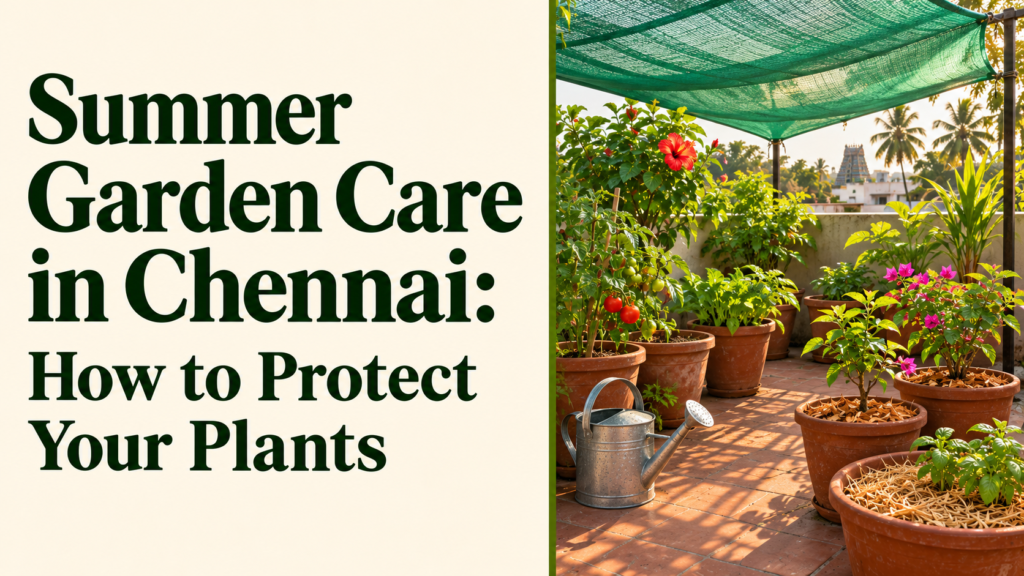
- Heat: orient seating so it is shaded in the afternoon, and use lighter-coloured paving that does not get as hot underfoot.
- Monsoon rain: grade the ground away from the house, add drains or soak pits, and avoid low spots in planting beds. Read more in our garden drainage guide.
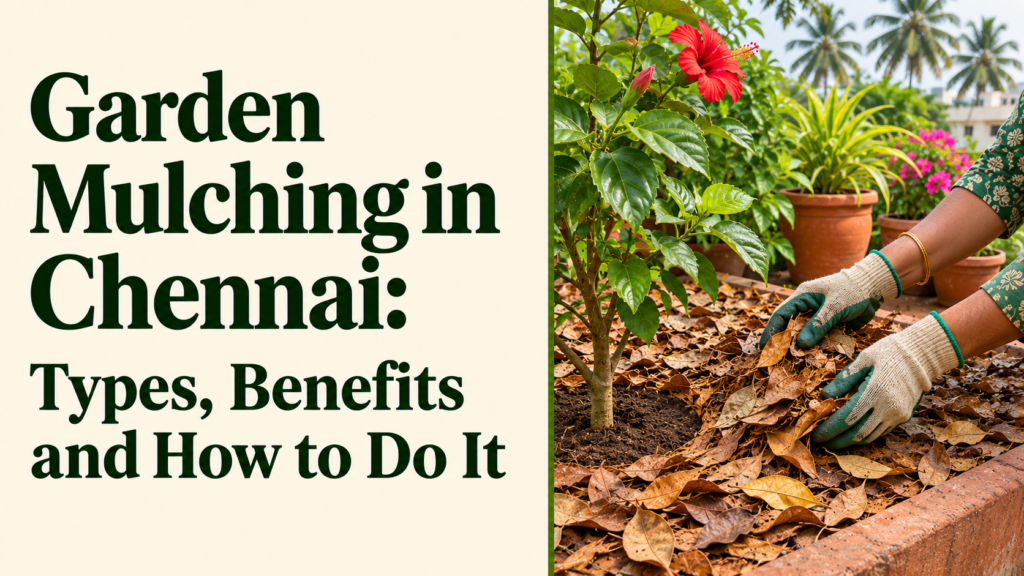
- Water scarcity: use drip irrigation, mulch, and group plants by water need.
- Coastal salt: near the coast, choose salt-tolerant species and corrosion-resistant fittings.
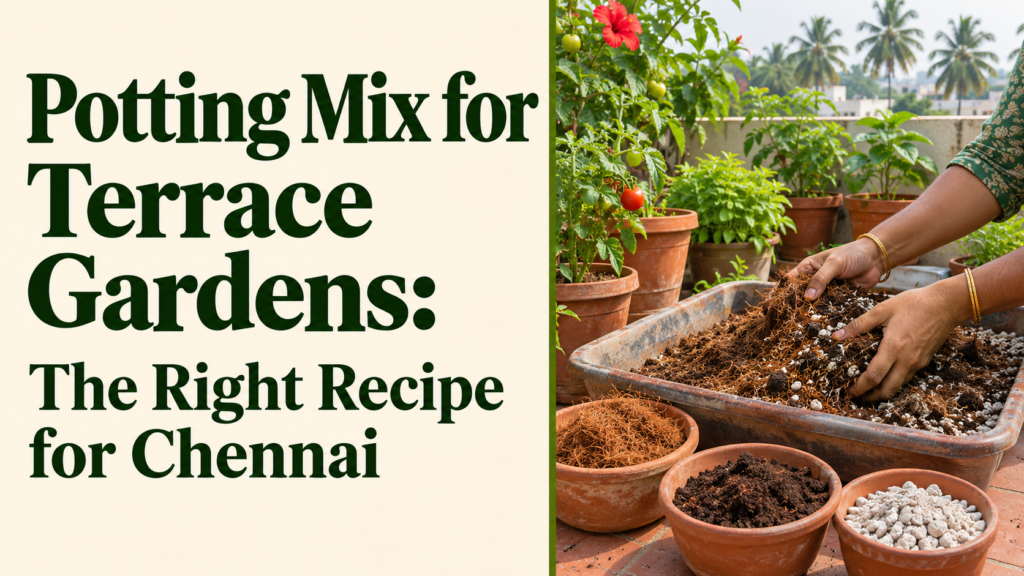
- Soil: amend heavy clay with compost before planting, rather than expecting plants to adapt.
Balancing softscape and hardscape
Good residential landscape design balances living elements (plants, lawn, trees) with built elements (paving, walls, pergolas, steps). Too much hardscape feels hot and harsh; too little and the garden becomes muddy and hard to use in the rains. A useful starting point is to hardscape the routes and gathering spaces people use most, and let planting fill the rest. The broader discipline of landscape architecture uses the same principle of designing for movement, use and environment together.
Ideas by property type
Independent houses with small plots
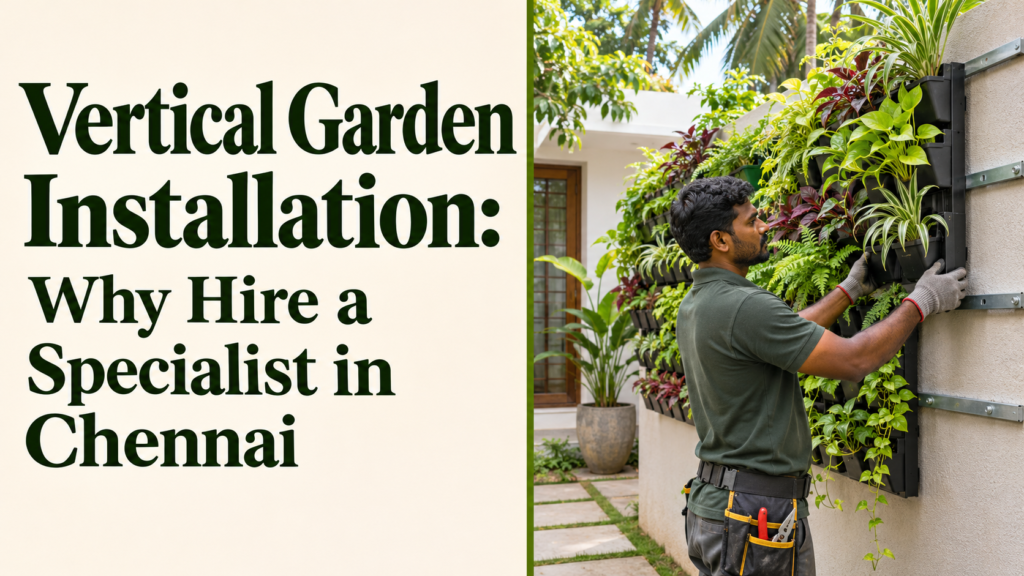
Focus on one strong feature, such as a tree with a bench beneath it, plus vertical planting on walls to make the most of limited ground. A green wall can transform a narrow side passage.
Villas with larger gardens
Larger plots allow distinct zones: a front garden for arrival, a lawn for play, a sit-out with pergola and a productive corner. Our villa garden landscaping guide goes deeper.
Apartments and terraces
Rooftops and podiums can host lightweight planters, decking and shade structures, provided waterproofing and load are checked first.
The residential landscape design process
- Site visit: measure the space, check sun, soil, drainage, water and existing trees.
- Brief: agree on how you want to use the garden, the style you like and your maintenance comfort level.
- Concept plan: zones, paths and key features laid out on a plan.
- Detailed design: plant palette, materials, irrigation and lighting.
- Execution: groundwork, drainage, hardscape, then planting and irrigation.
- Aftercare: a maintenance routine so the garden matures well.
Common mistakes to avoid
- Choosing plants for looks alone without checking sun, water and mature size.
- Planting trees too close to the house or compound wall.
- Skipping drainage, then dealing with waterlogging every monsoon.
- Too many small features that clutter rather than a few well-placed ones.
- Forgetting maintenance; a design should match how much time you can give it.
- Using slippery, polished stone on outdoor paths.
Budgeting for residential landscape design
The investment depends on garden size, the amount of hardscape, materials chosen, water features, irrigation and plant sizes. Phasing is a sensible approach: complete drainage, paths and key trees first, then add features over time. For a broader overview of what drives costs, read landscaping cost in Chennai. We provide a quote after a site visit, once the scope is clear.
Work with Win Landscape on your home garden
Since 2002, Win Landscape has designed and built gardens for homes and villas across Chennai, handling everything from planning and hardscape to planting, irrigation and maintenance. If you are planning a new garden or a makeover, explore our residential landscaping services in Chennai or book a free site visit. You can also call +91 94448 64732.
Frequently asked questions
How long does residential landscape design and execution take?
It depends on the size and scope. A small front garden may take a couple of weeks, while a full villa landscape with hardscape and water features takes longer. We share a timeline after the site visit.
Can I upgrade my existing garden instead of starting over?
Yes. Many projects retain mature trees and good existing elements, then improve layout, drainage, planting and lighting around them.
What is the most low-maintenance residential landscape design?
Designs that use native or well-adapted plants, mulch, drip irrigation and limited lawn area are usually the easiest to maintain in Chennai.