
Organic Kitchen Garden Setup for Chennai Homes
Organic kitchen garden Chennai setups are one of the most rewarding projects a home can take on: a few square metres of well-prepared beds can supply fresh greens, herbs and vegetables for much of the year, grown without synthetic pesticides. The challenge is that Chennai is not a gentle place to grow food. Long hot summers, a heavy northeast monsoon, clay or sandy soils and seasonal water shortages all shape what works.
This guide walks you through planning, building and maintaining an organic kitchen garden suited to Chennai homes, whether you have a ground-floor plot, a villa backyard or a sunny terrace. It draws on what we see on site visits across the city and keeps the advice practical.
Why an organic kitchen garden in Chennai makes sense
Growing food at home gives you control over what goes onto your plate. In an organic garden you build healthy soil with compost and natural inputs, manage pests with physical and biological methods, and choose varieties that suit the local climate. Beyond the harvest, families often tell us they value the routine itself: a morning walk through the beds, children learning where food comes from, and kitchen scraps turning into compost rather than waste.
Chennai also has an advantage that colder cities lack: you can grow something in almost every month. The trick is to match crops to the season rather than fighting the weather.
Choosing the right spot for your organic kitchen garden
Location decides more than any other factor. Before buying a single seed, observe your space for a few days.
- Sunlight: most fruiting vegetables such as tomato, brinjal, chilli and okra need at least five to six hours of direct sun. Leafy greens and herbs tolerate partial shade.
- Water access: place beds close to a tap or plan a simple drip line. Carrying cans in May quickly becomes a chore.
- Drainage: avoid low corners where rainwater pools during October and November. Waterlogged roots rot fast.
- Wind and salt: homes near ECR and the coast should use a hedge, trellis or wall to shield tender crops from salty breeze.
If your garden only gets morning sun, read our guide on kitchen garden planning for partial sun for crop choices that still perform well.
Building soil the organic way
Healthy soil is the foundation of any organic system. Many Chennai plots have heavy red clay that compacts in summer and turns sticky in the monsoon, while others near the coast are sandy and drain too quickly. Both improve with organic matter.
A simple soil recipe for raised beds
- Roughly equal parts good garden soil, well-rotted compost or vermicompost, and coco peat for moisture retention.
- A handful of neem cake mixed in to help discourage soil pests.
- Dry leaves or straw on top as mulch to keep roots cool and reduce evaporation.
Raised beds are especially useful in Chennai because they drain well in the monsoon and are easier to manage. Our article on raised bed gardening in Chennai covers bed heights, materials and layouts in more detail.
What to grow in an organic kitchen garden in Chennai
Plan by season rather than by wish list. A rough calendar that works for most homes:
- June to September: brinjal, chilli, okra, cluster beans, gourds on trellis, and amaranthus (keerai).
- October to December: leafy greens, coriander, fenugreek, radish and spinach do well in the cooler, wetter months if beds drain properly.
- January to March: the best window for tomato, beans, cabbage family crops and most herbs.
- April and May: focus on heat-tolerant greens, drumstick, curry leaf and perennial herbs; give beds shade net protection.
Perennials such as curry leaf, drumstick, lemon, papaya, lemongrass and pandan give steady returns with little effort and anchor the garden through the hottest months.
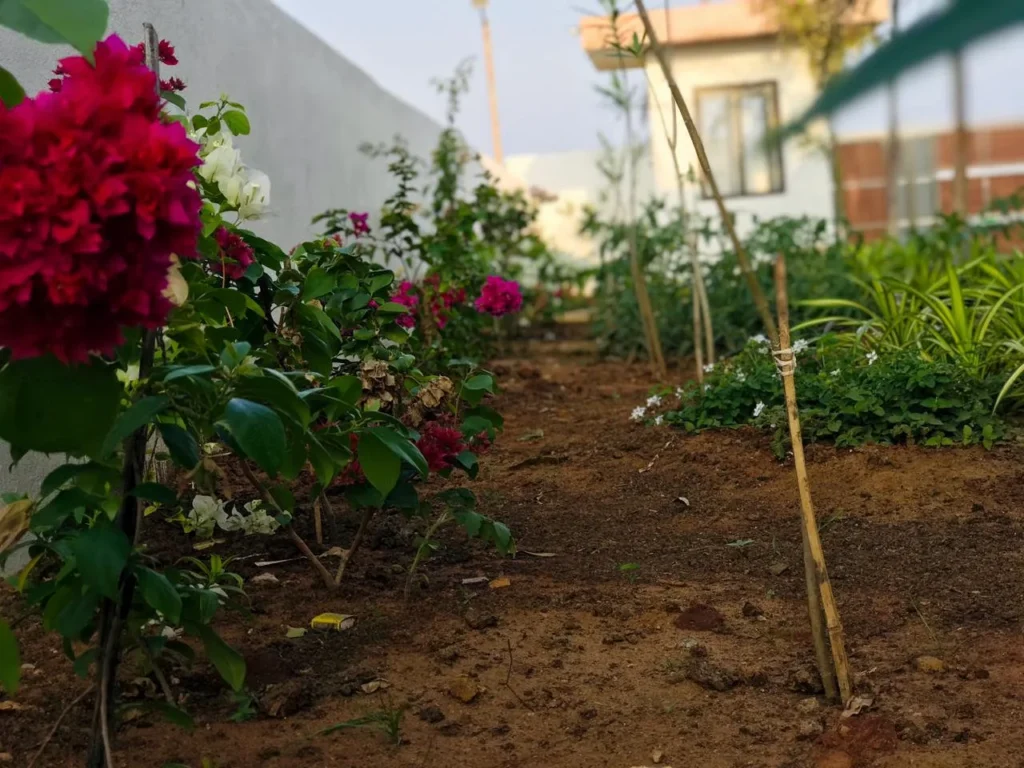
Watering an organic kitchen garden through Chennai seasons
Water is the biggest constraint in summer. Hand-watering wastes a surprising amount, and overhead sprinklers wet leaves and encourage fungal disease. A drip system delivers water directly to roots and can be put on a simple timer.
- Water early morning so plants are hydrated before the heat peaks.
- Mulch every bed; bare soil dries out within hours in May.
- During the monsoon, switch irrigation off and check that beds drain within a few hours after heavy rain.
- Consider collecting rooftop rainwater for the garden; see our note on rainwater harvesting in Chennai.
For a detailed comparison of systems, read drip irrigation in Chennai.
Organic pest and disease management
Pests are inevitable, but they rarely need chemicals. The aim is balance rather than elimination.
- Inspect regularly: look under leaves twice a week for aphids, whitefly and mealybugs.
- Remove by hand: pick off caterpillars and affected leaves early.
- Use neem-based sprays: diluted neem oil with a little soap, applied in the evening, helps with soft-bodied insects.
- Grow companions: marigold, basil and coriander attract beneficial insects and can confuse pests.
- Rotate crops: avoid planting the same family in the same bed season after season.
The principles of organic horticulture focus on soil life, diversity and prevention, which is exactly what keeps a small home garden productive.
Composting at home
A compost bin closes the loop. Kitchen peels, tea leaves, dry leaves and garden trimmings break down into a rich amendment within a couple of months in Chennai warmth. Keep a balance of wet green waste and dry brown material, turn the pile weekly, and keep it covered during heavy rain so it does not turn soggy and smelly. Avoid adding cooked food, oil or dairy, which attract pests.
Common mistakes to avoid
- Planting everything at once: stagger sowing every two to three weeks for a steady harvest instead of a glut.
- Ignoring drainage: flat beds on clay soil drown roots during the northeast monsoon.
- Too much shade: tomatoes and chillies planted in a shaded corner produce leaves, not fruit.
- Skipping mulch: bare soil bakes in summer and erodes in the rains.
- Overusing sprays: even organic sprays harm beneficial insects if used too often.
- Beds that are too wide: keep beds narrow enough to reach the centre without stepping on the soil.
Maintaining your organic kitchen garden through the year
Once the garden is set up, a small weekly routine keeps it productive: top up mulch, add a layer of compost between crops, prune tired plants, check irrigation emitters for blockages, and sow the next batch of seeds. Before October, clear drains and tie up climbers so they survive the monsoon winds. In March, install shade net over tender crops ahead of the summer heat.
If you prefer to enjoy the harvest without doing all the work, a periodic maintenance visit can handle soil top-ups, pruning, pest checks and replanting for you. Our garden maintenance services can be combined with a kitchen garden setup.
Planning your organic kitchen garden with Win Landscape
Win Landscape has designed and built gardens across Chennai since 2002, and kitchen gardens are a natural part of that work. We assess sunlight, soil, drainage and water access on site, then propose bed sizes, materials, irrigation and a seasonal planting plan that fits your space and routine. To explore options, visit our organic kitchen garden service in Chennai or contact us for a free site visit. You can also call +91 94448 64732.
Frequently asked questions
How much space do I need for an organic kitchen garden in Chennai?
Even two or three raised beds of about one metre by two metres can supply regular greens and herbs for a family. Larger plots allow fruiting vegetables and perennials such as papaya and drumstick.
Can I grow an organic kitchen garden on my terrace?
Yes, provided the terrace is waterproofed and can take the load of soil-filled beds or grow bags. Lightweight mixes with coco peat and good drainage are recommended.
When is the best time to start a kitchen garden in Chennai?
Late December to February is ideal for most vegetables, but you can start leafy greens during the cooler monsoon months if your beds drain well.