Pre-Monsoon Garden Checklist for Chennai Homes
A pre-monsoon garden checklist is the best insurance a Chennai gardener can have. When the northeast monsoon arrives, usually from October, it comes in heavy, sudden bursts that can waterlog beds, topple plants and turn a thriving garden into a soggy mess overnight. A little preparation in the dry weeks beforehand keeps your garden healthy, safe and beautiful right through the rains. Here is the complete pre-monsoon checklist our Chennai landscaping team works through, so nothing catches you out.
Why a pre-monsoon garden checklist matters
The monsoon is wonderful for a Chennai garden, free water, cooler weather and fast growth, but only if the garden is ready for it. Blocked drains, weak stakes and neglected waterproofing turn heavy rain into a problem instead of a blessing. Working through a checklist before the first downpour means water drains where it should, plants stand up to the wind, and you spend the season enjoying your garden rather than rescuing it. Prevention now saves a great deal of damage later.
1. Clear and check all drainage
Drainage is the single most important thing to sort before the rains. Clear every outlet, channel and drain of leaves, soil and debris so water flows freely, and check that the ground and terrace slope towards the outlets rather than pooling in low spots. Make sure potted plants have open drainage holes, and add gravel beneath beds where water tends to collect. Good garden drainage is what stands between your plants and root rot during a heavy Chennai monsoon.
2. Inspect terrace and waterproofing
If you have a terrace garden or a flat roof, check the waterproofing before the rain tests it. Look for cracks, worn coatings and gaps around pipes, and reseal anything suspect while the surface is still dry. Confirm terrace outlets are clear so water never gets a chance to pond. Our guide to terrace waterproofing in Chennai covers exactly what to check.
3. Prune, stake and support
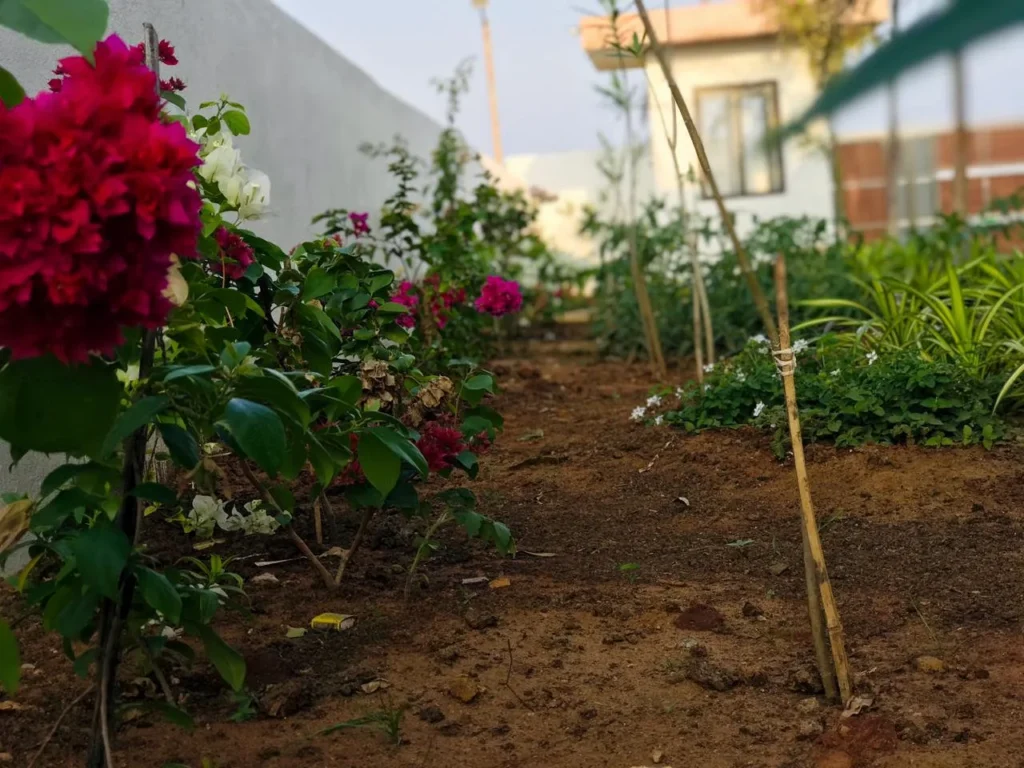
Strong winds come with the monsoon, so give your plants a fighting chance. Prune overgrown and weak branches that could snap, stake tall or top-heavy plants and young saplings, and tie climbers securely to their supports. Thinning dense growth also lets air move through the plant, which reduces the fungal problems that thrive in damp weather. A well-pruned, well-staked garden shrugs off wind that would flatten a neglected one.
4. Protect pots and tender plants
Container plants and delicate species need special care in heavy rain. Move pots that cannot handle a soaking under cover or against a sheltered wall, and raise them on feet or bricks so they never sit in standing water. Group tender plants where you can shield them, and be ready to cover seedlings during the fiercest downpours. A little forethought here saves your most vulnerable plants.
5. Feed, mulch and tidy the soil
Give plants a light feed before the rains so they enter the season strong, but avoid heavy fertilising just before a downpour, as it simply washes away. Spread a layer of mulch to protect the soil surface from pounding rain, reduce erosion and suppress weeds. Clear away fallen leaves and debris that could rot or clog drains, keeping beds and paths tidy. Healthy, well-mulched soil handles the monsoon far better than bare, compacted ground.
6. Watch for pests and disease
Damp, humid weather is a breeding ground for fungal disease, slugs, snails and mosquitoes. Remove any diseased leaves before the rain spreads the problem, keep the garden tidy so pests have fewer places to hide, and make sure no containers or saucers collect stagnant water where mosquitoes breed. Staying alert in the first weeks of rain keeps small problems from becoming big ones.
7. Plant for the season
The pre-monsoon window is also the ideal time to plant. Hardy, rain-friendly plants and native species establish quickly with the free rain, so this is the perfect moment to add to your garden. In fact, the weeks before and during the early monsoon are widely considered the best time to start a garden in Chennai, so a little new planting rounds off your preparation nicely.
Staying on top of the garden during the rains
Preparation gets you ready, but the monsoon rewards a little ongoing attention too. After each heavy spell, take a few minutes to walk the garden: clear any drain or outlet that has clogged with washed-down leaves, tip out saucers and containers holding stagnant water, and firm up stakes loosened by the wind. Watch how water actually moves across your plot during a real downpour, because the monsoon quickly reveals low spots and slow-draining corners that are easy to miss on a dry day, and those are exactly the places to improve before the next big rain. Keep an eye on leaves for the first signs of fungal spotting, and pull weeds while the soft, damp soil makes them easy to lift. None of this takes long, but these small, regular checks are what keep a Chennai garden not just surviving the monsoon but genuinely thriving on it, turning all that free rain into lush, healthy growth rather than waterlogged trouble.
Your quick pre-monsoon checklist
- Clear all drains, outlets and pot drainage holes.
- Check and repair terrace waterproofing.
- Prune weak branches and stake tall plants.
- Move and raise vulnerable pots.
- Feed lightly, then mulch the beds.
- Remove diseased leaves and standing water.
- Plant hardy, rain-friendly species.
Get monsoon-ready with confidence
A garden that is prepared before the rains sails through the monsoon and comes out greener than ever. If you would like professional help getting your garden monsoon-ready, explore our landscaping services or contact our Chennai team. For more on the season itself, see this overview of the monsoon.
Need expert help? Win Landscape offers professional garden maintenance services in Chennai, along with complete landscaping services across the city. Book a free site visit to discuss your garden.
Frequently asked questions
When should I prepare my garden for the monsoon in Chennai?
Work through your pre-monsoon checklist in the dry weeks of September and early October, before the northeast monsoon arrives in earnest.
What is the most important pre-monsoon task?
Clearing and checking drainage is the top priority, as waterlogging causes the most damage to Chennai gardens during heavy rain.
Can I plant during the monsoon?
Yes. With good drainage in place, the early monsoon is an excellent time to plant hardy and native species, which establish quickly in the rain.