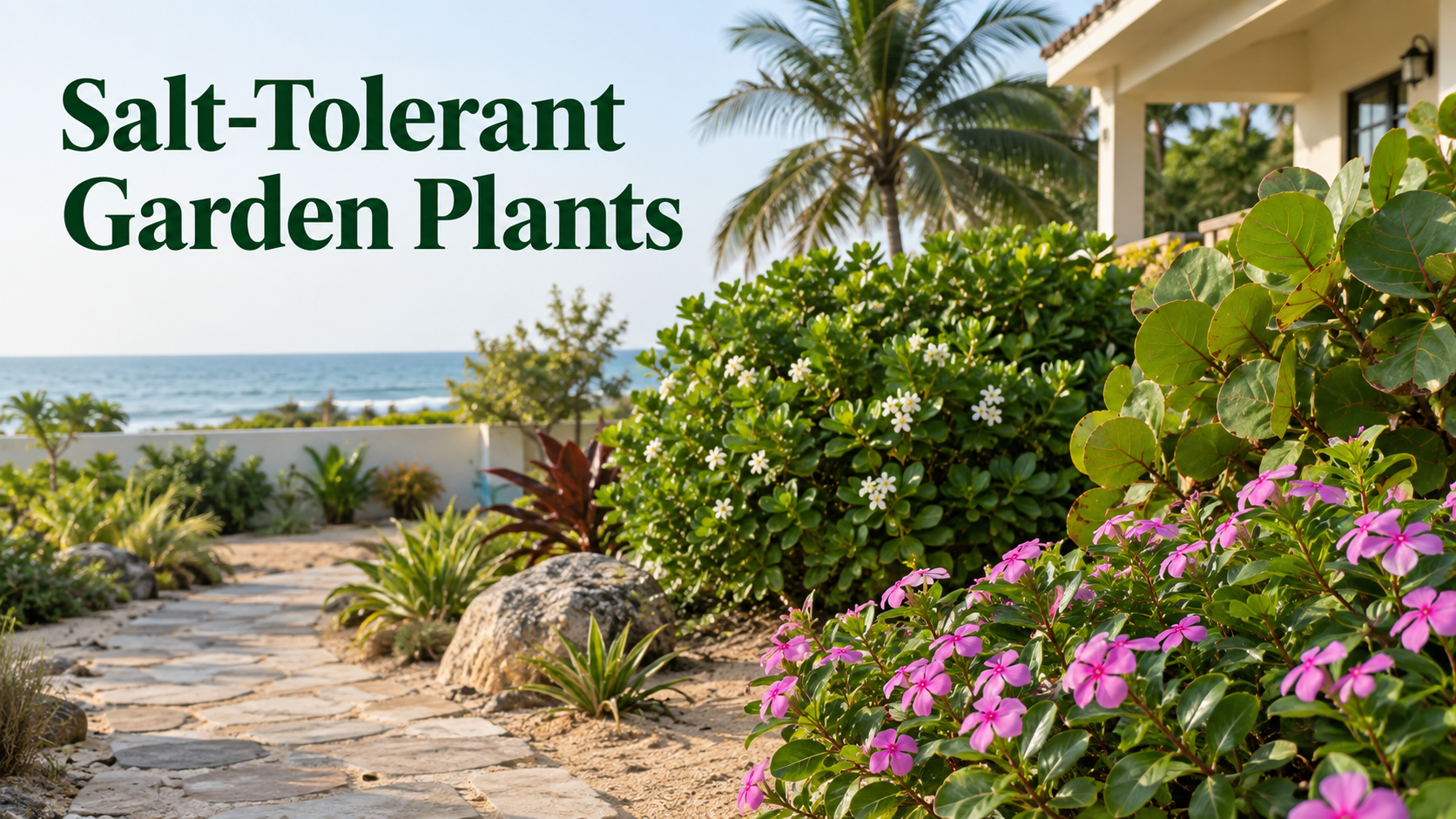
Salt-Tolerant Garden Plants for ECR Homes in Chennai
Choosing salt-tolerant garden plants can make coastal gardening more manageable for homeowners along Chennai’s East Coast Road. But choosing the right plant is only part of the job. Where you place it, how you water it and how much room it has to grow also matter.
A garden facing the sea has different conditions from a courtyard behind a building. Before filling your outdoor space with plants, take time to understand those differences.
This guide introduces four plants worth considering for an ECR garden, explains where they may fit and helps you avoid common planting mistakes.
Why Coastal Gardens Need a Different Approach
Salt can reach a garden through airborne sea spray, irrigation water or the soil itself. These are related problems, but they are not interchangeable.
A plant that tolerates salty air may still struggle when its roots are repeatedly exposed to unsuitable irrigation water. Salt tolerance also varies between species.
The University of Florida’s guide to soil salinity in home landscapes explains that excess salts can damage leaves and interfere with water uptake. It recommends testing soil and irrigation water when salinity is suspected.
For your ECR home, begin with three practical questions:
- Does the garden face the sea without much shelter?
- Are walls or neighbouring buildings protecting some areas?
- What water source will you use for irrigation?
The answers help you choose plants for the conditions you actually have.
Four Salt-Tolerant Garden Plants to Consider
The plants below are a starting shortlist, not a guarantee for every coastal property. Their documented characteristics help identify possibilities; final selection should account for your soil, water, available space and local nursery stock.
1. Beach Morning Glory for Open Ground
Botanical name: Ipomoea pes-caprae
Beach morning glory is a low-growing coastal plant with spreading stems and pink to purple flowers. It can suit an open planting bed where it has room to spread.
UF/IFAS describes it as highly tolerant of salty air and sandy soils. It also needs regular watering while establishing, even though established plants can tolerate dry conditions. See its beach morning glory growing guide.
For a home garden, consider it where you want groundcover rather than a neatly clipped lawn. Keep its spreading stems away from steps, drains and smaller plants.
Before planting, decide where the bed should end. Regular trimming will be easier if the boundary is clear and accessible.
Best fit: A sunny, well-drained bed with enough room for spreading growth.
2. Coastal Screw Pine for Larger Gardens
Botanical name: Pandanus tectorius
Coastal screw pine has long leaves and a distinctive branching form. It can create a strong focal point, but it needs more room than its nursery size may suggest.
Singapore’s National Parks Board records resistance to salt spray and saline soils. Its Pandanus tectorius profile also describes substantial mature growth, prop roots and spiny leaf edges.
That makes placement especially important. Keep it away from narrow paths, seating areas and places where people regularly brush past the foliage.
For a small front garden, ask whether another plant would provide a similar visual effect without outgrowing the space. Confirm the botanical identity when buying; different plants are sold under similar common names.
Best fit: A spacious coastal garden with clear separation from pedestrian routes.
3. Bougainvillea for a More Sheltered Sunny Position
Botanical name: Bougainvillea species and hybrids
Bougainvillea can add colour to a sunny garden, but it should not automatically be your first choice for the most exposed seafront edge.
UF/IFAS classifies bougainvillea as moderately salt tolerant and describes it as better suited to positions further inland. Its salt-tolerant plant guide provides that distinction.
For an ECR property, consider a position with some protection from direct sea spray. Discuss the variety, growth habit and pruning requirements with your nursery before buying.
Plan its support and maintenance access early. A colourful plant becomes less useful if it grows across a gate or makes a walkway difficult to use.
Best fit: A sunny, relatively sheltered part of the property.
4. Frangipani for a Flowering Feature
Botanical name: Plumeria species
Frangipani is another flowering option included in the UF/IFAS coastal plant guide linked above. It may suit a garden where you want a single feature plant rather than a dense planting scheme.
Choose its position with the mature canopy in mind. Leave room for maintenance and avoid judging suitability only by the size of a young nursery plant.
Ask a local horticulturist to match the species or variety to your site, especially where direct sea spray is frequent. Coastal suitability does not mean every plant will perform equally in every exposed location.
Best fit: A feature planting area selected after checking exposure and growing space.
Match the Plant to the Space
Use this table as an initial planning guide.
| Plant | Possible garden role | Main planning consideration |
|---|---|---|
| Beach morning glory | Spreading groundcover | Needs space and edge control |
| Coastal screw pine | Large focal plant | Mature size, prop roots and spiny leaves |
| Bougainvillea | Colour in a sheltered sunny area | Moderate salt tolerance; plan support and pruning |
| Frangipani | Flowering feature | Confirm suitable exposure and mature canopy space |
You do not need all four plants in one garden. A smaller, well-chosen selection is often easier to manage.
Plan Your ECR Garden in Zones
Walk around the property before deciding where each plant will go. Note the areas that feel most exposed and those that are naturally sheltered.
As a starting design approach, divide the garden into:
An exposed outer zone: Reserve this for plants selected specifically for the conditions at that boundary.
A sheltered middle zone: Use this for planting that benefits from some protection.
An everyday living zone: Keep entrances, seating and paths comfortable, with plants positioned for easy maintenance.
This is a layout approach to adapt, not a fixed planting formula. A compact courtyard and a large beach-facing villa will need different solutions.
For help with site assessment and planting layout, explore Win Landscape’s landscaping services in Chennai.
Check Drainage Before Buying More Plants
Even a carefully chosen planting scheme can struggle if water collects in the wrong places.
After rain or irrigation, look for areas where water remains around the planting beds. Check whether paved surfaces direct runoff towards them and whether drainage outlets are clear.
For containers, make sure excess water can escape. Avoid decorative arrangements that hide blocked outlets or make pots difficult to inspect.
If your garden already has recurring drainage problems, resolve them before investing in a larger plant collection. Our guide to garden drainage in Chennai explains issues to consider when planning the space.
Build a Practical Watering and Care Routine
New planting needs attention while it establishes. Do not assume that a coastal plant can be installed and immediately left without care.
Create a simple routine that fits your household:
- Check the planting beds and containers regularly.
- Adjust watering to the plant, weather and soil conditions.
- Keep spreading growth away from paths and drains.
- Inspect irrigation equipment for leaks or blocked outlets.
- Photograph recurring problems so you can explain them clearly.
If plants repeatedly develop leaf burn or poor growth, investigate the cause before replacing them with the same species. Soil and water testing may be more useful than guessing.
For broader planting ideas, read our guide to native plants for Chennai gardens. Native status and salt tolerance should still be checked separately.
Common Coastal Gardening Mistakes to Avoid
Choosing only by appearance
A plant may look healthy at a sheltered nursery but face very different conditions beside your home. Ask about exposure tolerance as well as colour and shape.
Ignoring mature size
Leave room for roots, branches and maintenance access. Moving an established plant can be much harder than choosing the right position initially.
Treating every part of the garden the same
One side may receive direct coastal wind while another is protected. Use those differences when planning.
Assuming brown leaves always mean a watering problem
Salt exposure is one possible cause, but symptoms need proper assessment. Avoid changing several care practices at once without understanding the problem.
Buying the whole planting scheme at once
Where conditions are uncertain, start with a small trial planting. Observe how it performs before repeating it across the property.
Need expert help? Win Landscape offers professional residential landscaping and home gardening services in Chennai, along with complete landscaping services across the city. Book a free site visit to discuss your garden.
Frequently Asked Questions
Which salt-tolerant garden plants suit a small ECR home?
Start with the space available rather than a long plant list. Beach morning glory needs spreading room, while coastal screw pine can become too large for a compact garden. A locally assessed planting plan can help you avoid unsuitable choices.
Can I water coastal plants with seawater?
No. Being described as salt tolerant does not make a garden plant suitable for routine seawater irrigation. If your borewell water may be saline, have its suitability checked before relying on it.
Is bougainvillea suitable for a beachfront garden?
It may work in a sunny position with some shelter. Because it is moderately salt tolerant, it should not be treated as equivalent to a highly tolerant coastal groundcover at a directly exposed boundary.
Are all native Chennai plants salt tolerant?
No. A plant’s native range does not automatically tell you how it handles salt spray or saline soil. Check the species and the conditions it naturally grows in.
How much does an ECR coastal garden cost?
The cost depends on the site, planting sizes, soil preparation, drainage, irrigation and maintenance requirements. Ask for an itemised estimate after a site assessment rather than relying on a general price per plant.
Plan a Coastal Garden That Fits Your Home
The right salt-tolerant garden plants can give your ECR garden a better starting point. Combine plant selection with sensible spacing, suitable irrigation water and a layout that works for everyday use.
Win Landscape can help you explore a practical garden plan for your Chennai property. Share photographs, approximate dimensions and details of your water source when you contact the team to discuss your project.