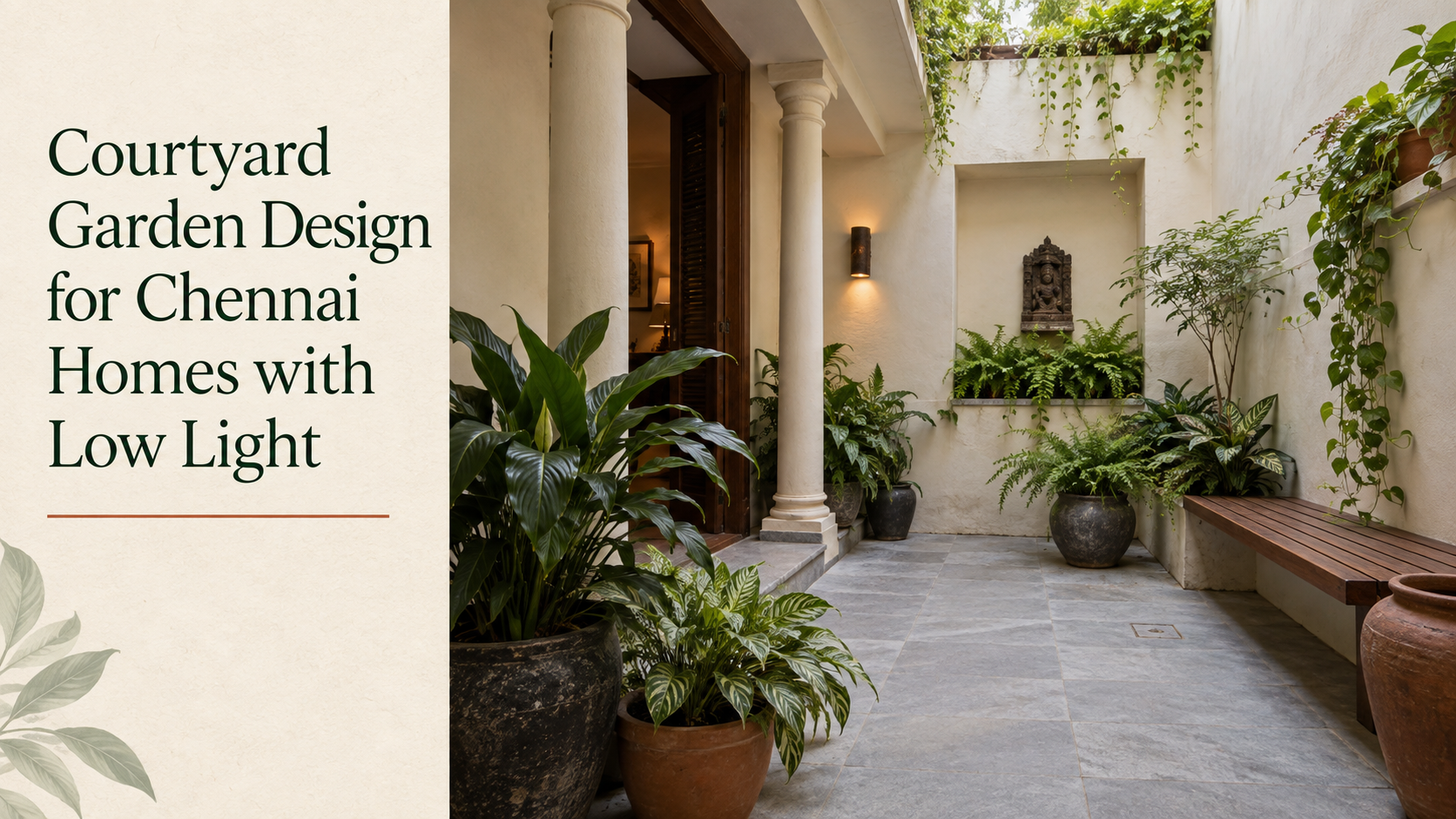
Courtyard Garden Design for Chennai Homes with Low Light
A courtyard surrounded by walls can feel like a difficult place to grow plants. It may receive only a short period of direct sunlight, while some corners remain shaded throughout the day.
Thoughtful courtyard garden design starts with understanding those differences. Instead of filling every corner immediately, identify the brightest planting positions, keep space for movement and choose plants that suit the available light.
For Chennai homes, drainage and watering deserve equal attention. An open courtyard may receive rain directly, while containers beneath roof overhangs remain dry.
With a practical layout and suitable planting, a shaded courtyard can become an inviting part of the home.
1. Begin Courtyard Garden Design With a Light Assessment
“Low light” does not describe every shaded space accurately.
A courtyard open to the sky may receive plenty of indirect daylight without direct sun. A narrow recess beneath a roof can be much darker.
Identify the conditions in each area
| Courtyard position | What it means for planning |
|---|---|
| Bright, indirect daylight | A useful starting point for many foliage plants |
| Brief direct sun with shade for the rest of the day | Match plants to the intensity and timing of that sunlight |
| Deep shade behind walls or beneath an overhang | Use a smaller plant selection and monitor growth |
| Almost no natural daylight | Living plants may need properly planned supplemental lighting |
Low-light tolerance does not mean a plant can grow indefinitely without useful light.
The University of Georgia’s guide to growing indoor plants explains that light is essential for growth and that both insufficient light and excessive exposure can cause problems.
Observe before buying plants
Check the courtyard in the morning, around midday and later in the afternoon.
Record where direct sunlight reaches the floor and walls. Repeat the observation as seasons change, because surrounding buildings and roof edges can alter the pattern.
A photograph taken at each observation time can help you compare positions.
Avoid choosing plants from the courtyard’s compass direction alone. The buildings and openings around it affect the actual light.
2. Choose a Small, Suitable Plant Palette
A low-light courtyard usually offers more dependable opportunities for foliage than for a continuous display of sun-loving flowers.
Start with a few plant types and repeat them where conditions are similar.
The following are candidates to assess—not a guarantee that every variety will thrive in every Chennai courtyard.
| Plant | Botanical name | Possible design role | Main care consideration |
|---|---|---|---|
| Cast iron plant | Aspidistra elatior | Shaded containers or a foliage border | Provide drainage and avoid harsh direct sun |
| Chinese evergreen | Aglaonema species and cultivars | Containers in sheltered positions | Check the specific variety’s light requirements |
| Pothos / money plant | Epipremnum aureum | Controlled trailing or supported growth | Avoid waterlogging and contain spreading stems |
Cast iron plant for shaded planting
Cast iron plant is worth assessing where you want upright foliage in a shaded position.
It tolerates shade and can grow in containers, but its tolerance should not be confused with a preference for permanently wet roots. North Carolina State Extension’s plant profile describes its shade preference and need for well-drained soil.
Use its mature size when deciding spacing. Do not crowd new plants simply to create an immediate full appearance.
Chinese evergreen for sheltered containers
Chinese evergreen offers different foliage patterns and colours. Choose the variety for its growing requirements as well as its appearance.
A highly coloured cultivar should not automatically be assigned to the darkest corner. Check its needs with the nursery and use the North Carolina State Extension Aglaonema profile as a reference.
Pothos for a controlled trailing feature
Pothos can provide trailing foliage from a stable container or climb a suitable support.
It tolerates low light but generally performs better in bright indirect light. Overwatering can cause root problems. North Carolina State Extension’s pothos profile explains these requirements.
Keep growth away from drains, openings and neighbouring planting.
For homes with pets or young children: Chinese evergreen and pothos can cause harm if chewed. Check plant suitability before using them in accessible positions.
3. Keep the Layout Open and Easy to Use
A courtyard can become crowded quickly when every edge contains a large pot.
Decide what the space needs to do before choosing the number of plants.
Is it mainly a view from the living room? A place for morning tea? A route between rooms? The answer should guide the layout.
Establish a clear movement route
Keep doors, steps and access to drains unobstructed.
If the courtyard connects several rooms, preserve a comfortable route between them. Check the arrangement with doors fully open and furniture in use.
Avoid placing broad leaves where people repeatedly brush against them.
Use one main focal point
A feature container, a small seating arrangement or a group of foliage plants can give the courtyard a clear centre of interest.
You do not need a fountain, sculpture, vertical garden and several statement pots in the same compact space.
Choose one main feature and let the other elements support it.
Repeat materials
A limited selection of planter finishes and paving materials can make the layout easier to read.
For example, repeated terracotta containers or a consistent neutral finish can connect separate planting groups without filling the entire floor.
4. Use Walls and Vertical Space Carefully
Vertical planting can be useful when floor area is limited, but it does not increase the amount of daylight entering the courtyard.
A planted wall beneath a deep overhang may be harder to maintain than a few containers positioned closer to the opening above.
Check light at plant level
The upper and lower parts of a wall may receive different amounts of daylight.
Assess each planting area rather than assuming the whole wall has one set of conditions.
Plan access and drainage
Before installing a vertical garden, consider:
- How plants will be watered.
- Where excess water will drain.
- How individual plants can be replaced.
- Whether the wall needs protection.
- How the support system will be fixed.
- Whether maintenance can be done without blocking the courtyard.
Win Landscape’s guide to vertical gardens in Chennai provides related planning information.
Choose finishes without expecting miracles
A lighter wall finish may make a courtyard feel brighter and reflect some available light. It cannot replace an adequate daylight source.
Likewise, decorative wall lighting should not be assumed to provide enough light for plant growth.
If supplemental lighting is needed, select it according to the plants, coverage and installation conditions.
5. Resolve Drainage Before Adding Permanent Beds
An enclosed courtyard needs a clear route for rainwater and irrigation runoff.
Inspect the space after rain where possible. Look for puddles, blocked outlets and water collecting near door thresholds.
Keep access to drainage points
Do not cover an inspection point with a permanent planter or build a bed where it prevents drain maintenance.
Keep leaves and loose growing medium from collecting around outlets.
If you are changing the floor finish, have the levels and drainage assessed as part of the work.
Distinguish planting beds from containers
An in-ground bed and a container placed on a paved floor handle water differently.
A pot needs clear drainage openings. A permanent bed needs a design appropriate to the structure and ground beneath it.
A decorative layer of pebbles on top does not correct poor drainage below.
For related guidance, read Win Landscape’s article on garden drainage in Chennai.
Check the walking surface
Choose an outdoor finish appropriate for damp conditions and keep it clean.
Avoid creating awkward changes in level around planters. The courtyard should remain comfortable to walk through after watering or rain.
6. Match Watering to Each Planting Position
A shaded courtyard should not automatically receive the same watering programme as a sunny terrace.
Check the growing medium and the plant’s condition before deciding how much water to apply.
Group plants by care needs
Place plants with similar watering requirements together where practical.
Keep sheltered pots separate in your care routine from those that receive rain directly.
Two matching containers may still dry at different rates because of their plant size, root growth and exposure.
Make watering easy to inspect
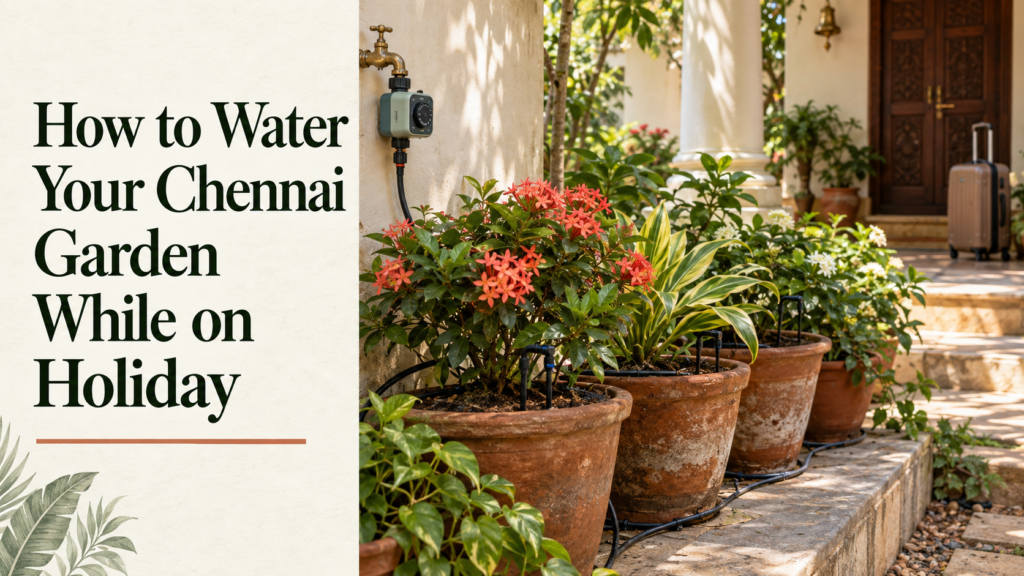
If using drip irrigation, check that each outlet reaches the intended root area.
Watch a complete cycle and inspect representative containers afterwards. Correct missed pots or leaks before changing the runtime for the entire courtyard.
Win Landscape’s guide to drip irrigation in Chennai covers a related part of irrigation planning.
Avoid treating every yellow leaf with more water
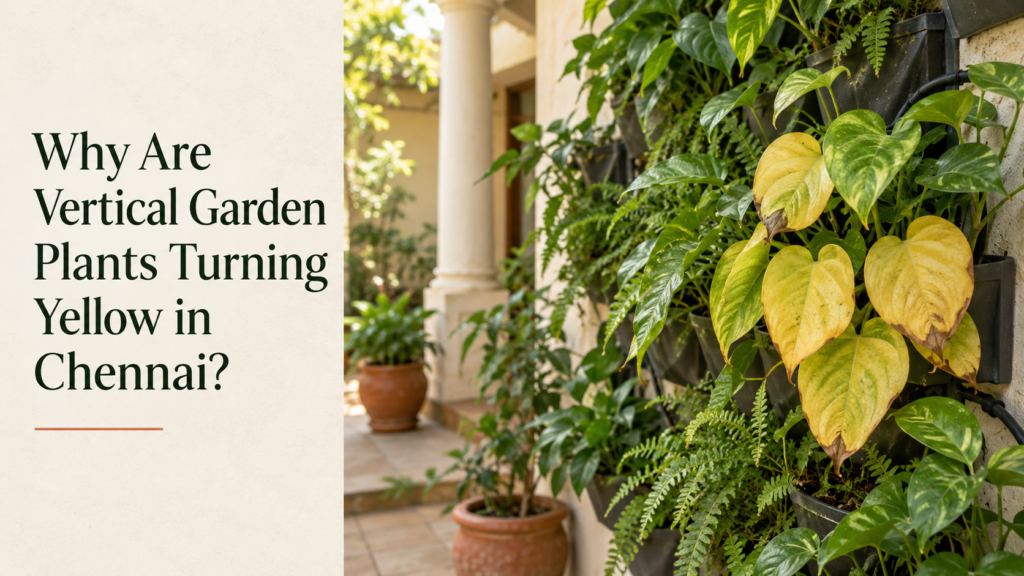
Yellowing can have several causes. Check moisture, drainage and light before increasing watering or adding fertiliser.
A small maintenance record can help you identify whether a problem began after a change in routine.
7. Add Seating and Lighting With Maintenance in Mind
A courtyard becomes more useful when you can comfortably spend time in it.
Choose furniture after marking the space needed for planting and movement.
Test the seating footprint
Place temporary markers where the chair or bench will stand.
Check whether someone can sit down, move their legs and walk past without touching the plants.
Keep cushions and other items appropriate to the courtyard’s exposure to rain.
Light the space for people
Use lighting to make the route, doorway and seating area easy to see.
Avoid directing glare into adjoining rooms. Have electrical fittings and wiring selected and installed for the actual outdoor or damp conditions.
If plant lighting is required, plan it separately. Its purpose, positioning and operating schedule differ from decorative evening lighting.
A Simple Layout for a Small Shaded Courtyard
An illustrative arrangement could include:
- One clear route between the adjoining doors.
- A planting group in the brightest available position.
- A shaded border using suitable foliage plants.
- A compact bench along an unobstructed wall.
- An accessible drainage point.
- A limited number of movable containers.
This is a design concept, not a measured plan. The final arrangement depends on door positions, drainage, available light and the courtyard’s dimensions.
Start with fewer plants if conditions are uncertain. Observing their performance is more useful than replacing a densely planted scheme later.
What If the Courtyard Is Too Dark for Plants?
Some spaces described as courtyards are almost fully enclosed.
If plants repeatedly decline despite appropriate watering and drainage, investigate the light level rather than trying an endless succession of “low-light” species.
Options may include moving planting closer to the available daylight or planning suitable grow lights.
Any change to a roof opening or building structure requires an appropriate professional assessment.
You can also keep the darkest part primarily for seating or a decorative feature and concentrate living plants where conditions support them.
Common Courtyard Garden Design Mistakes
Treating low light as no light
Shade-tolerant plants still need adequate light for long-term growth.
Choosing plants only from a reference photograph
The pictured courtyard may have different light, dimensions and ventilation.
Overcrowding the floor
Leave room for movement, cleaning and mature plant growth.
Hiding drainage points
Keep them accessible throughout the life of the garden.
Using one watering routine for every pot
Consider rain exposure, container size and individual plant needs.
Expecting constant flowering in deep shade
Build the design around achievable foliage growth rather than an unrealistic flowering display.
What to Include in Your Design Brief
Before requesting a quotation, prepare:
- Courtyard measurements.
- Photographs at different times of day.
- Door and window positions.
- Existing drainage details.
- The main purpose of the space.
- Preferred maintenance level.
- Whether pets or children use the area.
Ask for the plant names, proposed mature sizes and a clear maintenance plan.
For broader care ideas, explore Win Landscape’s low-maintenance garden guide for Chennai.
Need expert help? Win Landscape offers professional residential landscaping and home gardening services in Chennai, along with complete landscaping services across the city. Book a free site visit to discuss your garden.
Frequently Asked Questions
Can a courtyard garden grow without direct sunlight?
Yes, some foliage plants can grow with sufficient indirect daylight. However, a very dark enclosed area may need supplemental lighting.
Which plants should I consider first?
Cast iron plant, suitable Chinese evergreen varieties and pothos are candidates to assess. Match them to the actual conditions and check household safety requirements.
Is a lawn suitable for a low-light courtyard?
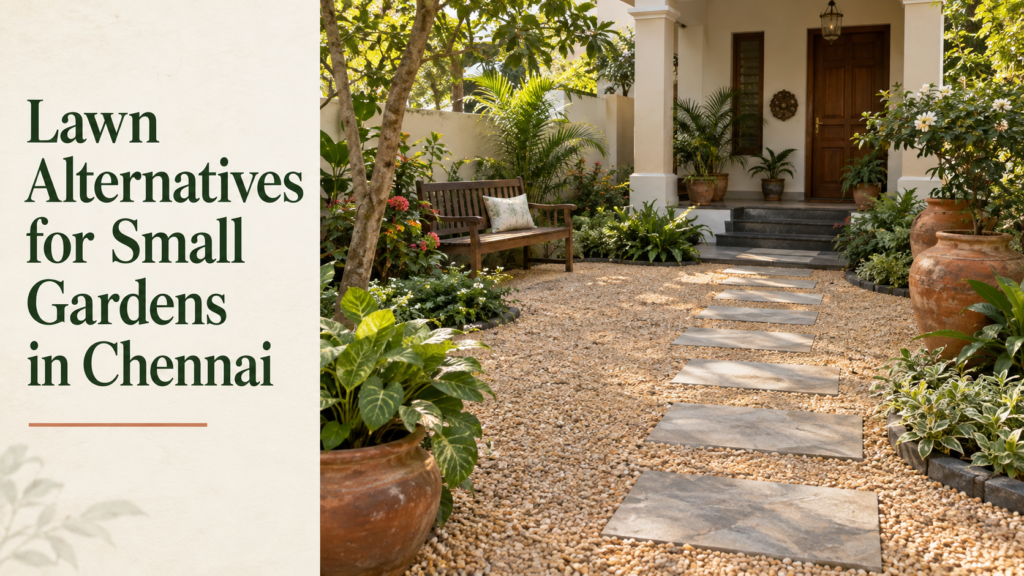
Do not assume it will perform well. Where light is insufficient for healthy turf, suitable planting beds and a practical walking surface may be easier to manage.
Can I add a vertical garden?
Yes, if the wall receives enough light and the installation has suitable irrigation, drainage and maintenance access.
How often should I water?
There is no single schedule for every courtyard. Check the growing medium and adjust for each plant’s needs and exposure to rain.
Do decorative lights help plants grow?
Not necessarily. If natural light is insufficient, use a properly planned plant-lighting setup rather than relying on decorative fittings.
Plan Your Chennai Courtyard With Win Landscape
Successful courtyard garden design brings together suitable planting, usable space and a manageable care routine.
Start with the light and drainage, then choose a layout that fits how your household will use the courtyard.
Explore Win Landscape’s landscaping services or contact Win Landscape to discuss a courtyard garden for your Chennai home.