Garden Paving in Chennai: Pavers, Gravel or Natural Stone?
Choosing garden paving in Chennai involves more than finding a colour that matches your house. The surface should suit the way you walk, sit, park and maintain your outdoor space.
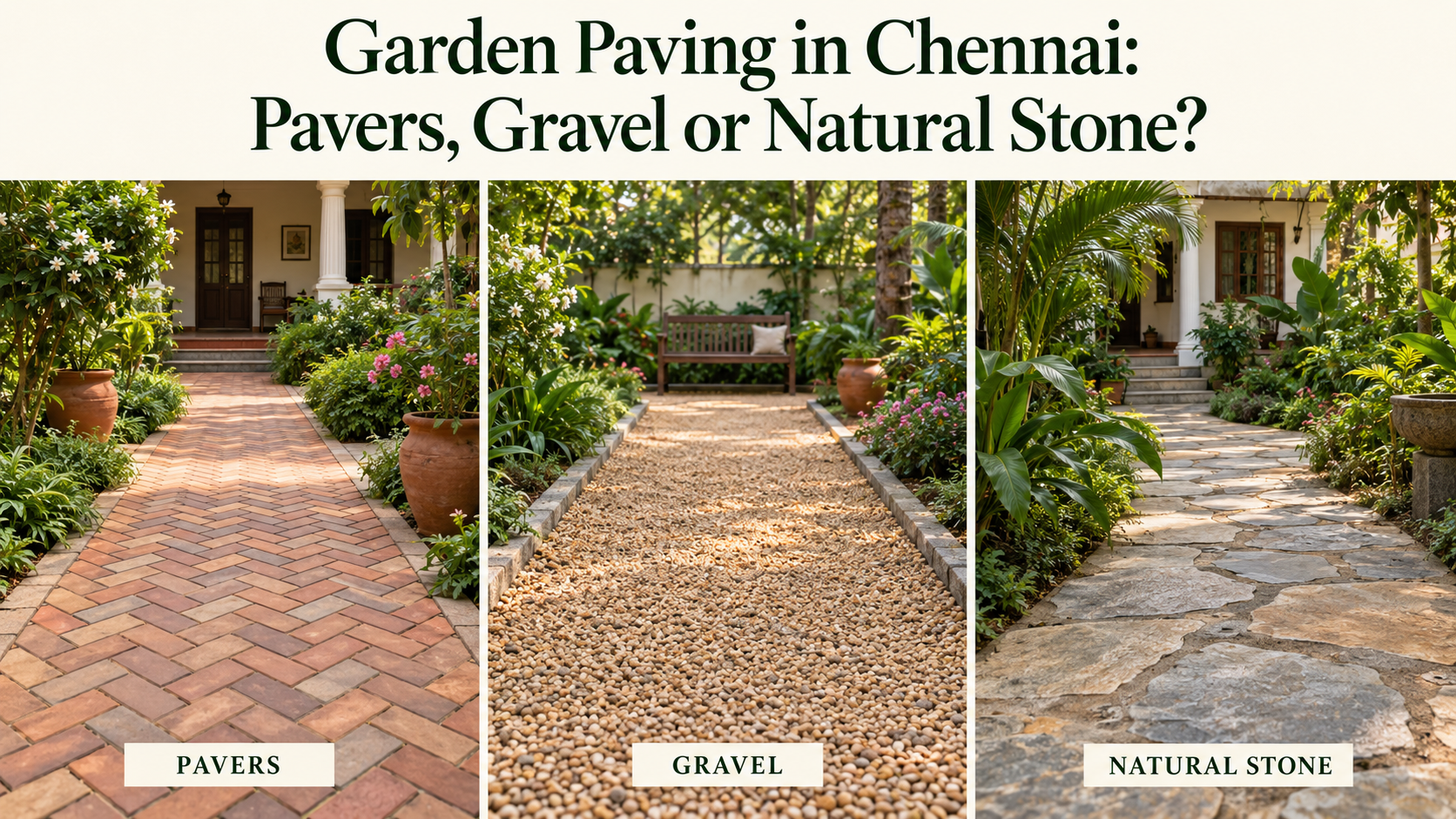
Pavers can create an organised entrance or pathway. Gravel can work well in informal garden areas. Natural stone can bring distinctive texture to a courtyard or seating space. But each option needs the right foundation, drainage and maintenance.
Before choosing, think about who will use the area and what happens there during rain. A decorative strip beside a flower bed has different requirements from the main route to your front door.
This guide compares the three options and explains how to make a practical choice for your home.
Garden Paving in Chennai: A Quick Comparison
In this article, “pavers” refers mainly to manufactured concrete paving blocks. Natural stone can also be supplied as paving units, but it is discussed separately because its appearance and care vary by stone type.
| Consideration | Concrete pavers | Loose gravel | Natural stone |
|---|---|---|---|
| General appearance | Regular patterns and repeatable shapes | Informal, textured finish | Natural variation in colour and texture |
| Common uses | Paths, courtyards and suitably designed parking areas | Decorative areas and suitable secondary paths | Patios, garden paths and seating areas |
| Walking surface | Can provide a firm, even route | Can shift underfoot | Depends on finish, joints and installation |
| Furniture | Usually practical when properly laid | Narrow furniture legs may sink or move | Practical when sufficiently even |
| Drainage | Conventional and permeable systems differ | Depends on the whole construction and underlying ground | Depends on joints, base and drainage design |
| Routine attention | Cleaning, joints and settlement checks | Raking, containment and occasional replenishment | Cleaning suited to the stone and finish |
| Main decision | Product suitability and installation quality | Whether a loose surface suits the intended use | Exact stone, finish and installation specification |
No material is automatically the best choice for every part of a garden. A combination may be more useful than covering the whole space with one surface.
Start with How You Use the Space
Before visiting a paving supplier, divide your garden into practical areas.
You might have a main entrance path, a parking space, a seating corner and a narrow route used only for plant maintenance. These areas do not necessarily need the same finish.
Ask yourself:
- Will people use this route every day?
- Will children, older family members or wheelchair users need easy access?
- Will furniture stand on the surface?
- Will vehicles pass over it?
- Do leaves, soil or irrigation water regularly reach the area?
- Where does rainwater currently collect?
Mark the layout on the ground and walk through it. Check door openings, gate movement and access to utility covers.
A material sample helps you choose the finish. A clear layout helps you decide where that finish belongs.
Option 1: Concrete Pavers for an Organised Layout
Concrete pavers are manufactured units available in different sizes, shapes and finishes. They can create a regular pattern that works with a contemporary house or a simple garden layout.
They are worth considering where you want a clearly defined walking surface or a coordinated entrance.
When Pavers May Suit Your Garden
Consider pavers for:
- The main route from the gate to the house.
- A courtyard connecting different outdoor areas.
- A seating space with regularly used furniture.
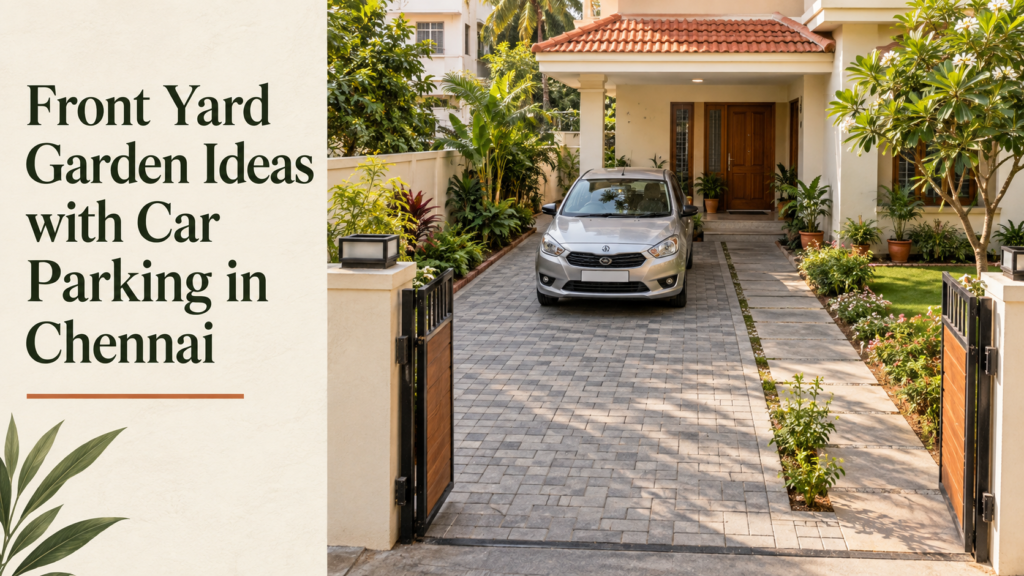
- Parking areas designed for vehicle loading.
- A garden where repeating shapes will simplify the appearance.
Do not assume every paving block is suitable for a driveway. Ask the supplier and installer to confirm the product and construction needed for its intended use.
What to Check Before Ordering
Ask for the actual product specification, not just a photograph.
Discuss the surface finish, thickness, intended application, laying pattern and edge restraint. The supporting construction should be selected for the ground conditions and expected load.
Where future access to buried services is important, ask how the proposed installation can be opened and reinstated. Some modular systems make local repairs practical, but the answer depends on the construction method.
Keep a small quantity of matching spare units where possible. A future replacement may otherwise differ from the original batch.
Maintenance Considerations
Inspect the finished surface for movement, uneven joints and damaged edges. If an area repeatedly settles, investigate the underlying cause rather than only lifting and resetting the visible blocks.
Ask the installer which cleaning methods and joint-maintenance procedures suit the product. A strong pressure washer is not automatically the right choice for every paving system.
Option 2: Gravel for Informal Garden Areas
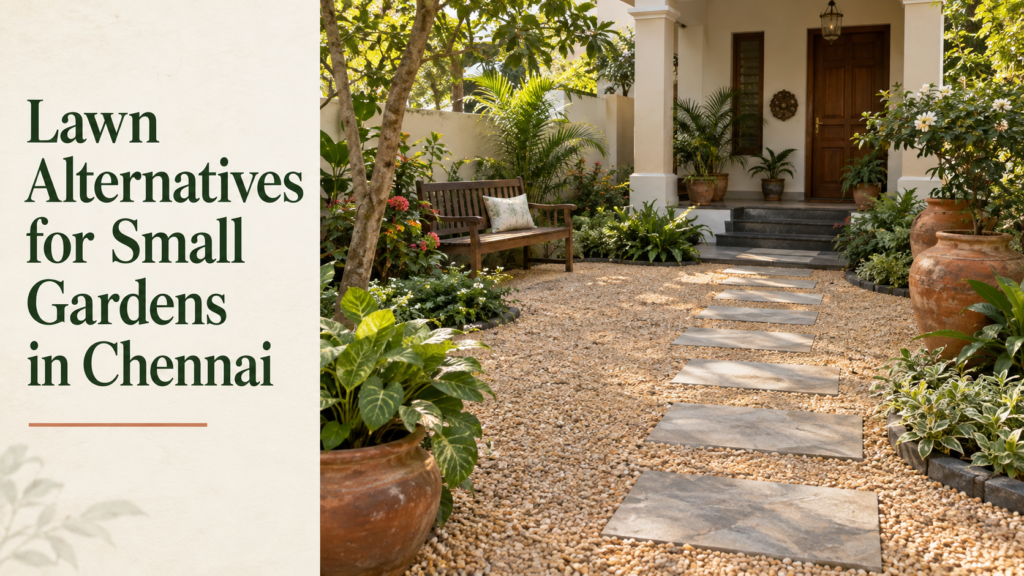
Loose gravel offers a different look and feel from a paved surface. It can work beside planting beds, around selected garden features or along a secondary route.
However, decorative gravel and a well-built gravel path are not the same thing. Aggregate selection, preparation and containment affect how the surface behaves.
Where Gravel Can Work Well
Gravel is worth assessing for:
- Decorative spaces between planted areas.
- Informal garden corners.
- Secondary paths where a loose finish is acceptable.
- Areas around stepping stones.
- Small spaces where visual texture matters more than a continuous firm surface.
Loose material can migrate onto adjoining paving, so include a suitable boundary detail. Ask how leaves and soil will be removed without repeatedly losing gravel.
Where to Be More Careful
A loose gravel surface may be inconvenient for small wheels, walking aids or narrow chair legs. For a frequently used accessible route, assess a firm, stable alternative.
Do not assume adding a stabilising grid makes every gravel installation equally usable. Review the complete product system and test a representative sample if accessibility is important.
For practical information on aggregate selection and construction, see the Pavingexpert guide to gravel paths and drives.
Maintenance Considerations
Discuss raking, topping up and weed management before choosing gravel.
A membrane does not guarantee a permanently weed-free surface. Windblown soil and organic debris can still collect over time.
The right question is not “Does gravel need maintenance?” It is “Will this maintenance routine suit the way we use the garden?”
Option 3: Natural Stone for Texture and Character
Natural stone can provide colour variation and a less uniform appearance than manufactured paving. It may suit a garden seating area, courtyard or feature path.
However, “natural stone” is a broad description. Granite, sandstone and limestone do not have identical properties, and different finishes can change how a stone performs.
Choose the Exact Stone and Finish
Ask to see more than one sample. A single piece may not show the range of colour, markings or texture in a delivery.
Discuss:
- Suitability for exterior paving.
- Surface finish and wet-slip performance.
- Thickness and installation method.
- Variation between pieces.
- Cleaning requirements.
- Whether sealing is appropriate.
Do not assume a polished finish used indoors will be suitable for a wet garden path. Ask for relevant product information rather than relying on descriptions such as “premium” or “anti-skid.”
Where Natural Stone May Fit
Consider it for an outdoor dining area, a courtyard connected visually to the house or a feature path through planting.
For frequently used routes, balance texture with comfort. A very uneven surface may look attractive but make chairs unstable or walking less comfortable.
Ask the installer to show how joints and level differences will be handled.
Maintenance Considerations
Cleaning should match the specific stone. The Natural Stone Institute explains that acidic cleaners can damage some stones and that sealing does not make stone stain-proof.
Its natural stone care guide is a useful reference when discussing maintenance with your supplier.
Do not apply a sealer simply because someone recommends sealing “all stone.” Confirm whether the selected product needs it and whether the treatment changes appearance or slip performance.
Plan Drainage Before Choosing the Pattern
Drainage is one of the most important parts of garden paving in Chennai. A good-looking surface is disappointing if rainwater collects outside the door or around the seating area.
Before work begins, identify:
- Existing low points.
- Water arriving from roof outlets.
- Runoff from neighbouring paved areas.
- Drain locations.
- Door thresholds.
- Places where water must not be directed.
Ask the installer to explain the proposed levels and drainage route.
Permeable paving is a complete system, not simply paving with visible gaps. Its performance depends on the surface, supporting layers and ground conditions. The US Environmental Protection Agency’s permeable pavement guide explains the principle of allowing water through a pavement system.
Similarly, a layer of gravel over an impermeable base does not automatically solve runoff.
For related planning advice, read Win Landscape’s garden drainage guide for Chennai.
Check Comfort in Sun and Rain
A showroom sample may look different in your garden. View materials outdoors before making a final decision.
Compare samples beside the house exterior, garden soil and planting. Look at them both dry and wet, because appearance can change.
Also consider:
- Whether the surface becomes uncomfortable in direct sun.
- Whether a pale finish creates unwanted glare.
- How the texture feels under normal footwear.
- Whether joints interfere with furniture.
- How leaves and mud affect cleaning.
- Whether the route remains easy to see after dark.
Do not assume all natural stone stays cool or every textured paver provides adequate wet grip. Ask for product-specific information and use samples to assess comfort.
A brief sample check is useful, but it does not replace slip-resistance data or an appropriate installation specification.
Match Each Surface to the Right Area
Rather than choosing one material for the entire property, consider a simple combination.
| Garden area | Starting option to assess | Reason |
|---|---|---|
| Main entrance route | Suitable pavers or even-finished stone | A firm, predictable walking surface |
| Outdoor dining space | Pavers or appropriately finished stone | Stable placement for tables and chairs |
| Decorative planting edge | Contained gravel | Texture without requiring a large paved area |
| Secondary garden route | Gravel or carefully planned stepping stones | May suit occasional use |
| Vehicle parking | A paving system designed for the load | Requires suitable product and supporting construction |
These are design starting points, not specifications for every property.
Keep the main walking route easy to follow. Too many material changes can make a small garden look busy and create awkward transitions.
Three Layout Ideas for Chennai Homes
The following examples are illustrative concepts rather than completed project case studies.
A Small Front Garden
Use a clear paved route from the gate to the entrance. Keep planting beside it rather than placing pots in the walking line.
A contained gravel strip may add texture along a flower bed, while the main route remains firm and easy to sweep.
Before deciding on width, test the route while carrying shopping bags or moving the items you normally bring into the house.
A Garden Seating Corner
Choose a stable surface beneath the furniture and reserve gravel for the surrounding decorative area.
Place the actual chairs and table in the proposed footprint. Check whether people can pull out chairs and walk around comfortably.
Coordinate the paving with shade and planting. A beautifully finished seating area may still be uncomfortable if it is placed where you do not enjoy spending time.
A House with Parking and Planting
Treat the parking area and pedestrian route as connected but different parts of the design.
Confirm the vehicle-loading requirements before selecting paving. Keep loose aggregate away from locations where it may repeatedly spread into the entrance.
Discuss how water will drain without being directed towards the house. Also make sure inspection covers remain accessible.
For help coordinating these elements, explore Win Landscape’s landscaping services in Chennai.
Compare the Full Installed Cost
The material price alone does not tell you what the project will cost.
An installation may also include removal of the old surface, excavation, disposal, preparation, drainage, edging, cutting and reinstatement.
Ask each contractor to quote for the same scope:
- Measured area and intended use.
- Exact paving or aggregate product.
- Ground preparation and supporting layers.
- Bedding and jointing method.
- Edge restraints.
- Drainage work.
- Labour and access requirements.
- Waste removal.
- Finishing and cleaning.
- Maintenance instructions and warranty terms.
Avoid assuming gravel is always the cheapest installed option or natural stone is always the most expensive. Local supply, preparation and detailing can change the comparison.
A useful quotation explains what you are buying and what is excluded.
Questions to Ask Your Installer
Before approving the work, ask:
- Why does this material suit this area?
- How will the ground conditions affect the installation?
- Where will rainwater go?
- Is the surface suitable for the intended foot or vehicle traffic?
- How will edges and thresholds be finished?
- Can utility covers still be opened?
- What maintenance does the product need?
- How will future repairs be handled?
Ask for a small sample panel where the appearance, pattern or joint finish is difficult to judge from individual pieces.
Record the agreed product and finish in writing. This helps prevent misunderstandings between the sample you selected and the material delivered.
Checks Before Accepting the Finished Work
Walk over the completed surface and inspect the transitions.
Look for rocking units, abrupt edges, loose containment and awkward changes in level. Open nearby doors and gates to confirm clearance.
Check the drainage arrangement with the installer. If water testing is appropriate for the system, ask them to demonstrate it and explain what you should expect.
Confirm that drain covers and maintenance points remain accessible. Collect the product details, cleaning instructions and any spare materials agreed in the quote.
Take photographs before furniture and planters hide important details. They can be helpful if repairs are needed later.
Common Mistakes to Avoid
Choosing from photographs alone: Request real samples and product information.
Ignoring the supporting construction: The surface finish cannot compensate for unsuitable preparation.
Treating every material as permeable: Assess the complete drainage system.
Using loose gravel everywhere: Consider furniture, walking aids and daily access.
Selecting an indoor finish for outdoor use: Confirm suitability for exposure and wet conditions.
Comparing incomplete quotations: Include preparation, edging, drainage and disposal.
Forgetting maintenance: Choose a finish you can keep usable and attractive.
Need expert help? Win Landscape offers professional hardscape and hard landscaping contractors in Chennai, along with complete landscaping services across the city. Book a free site visit to discuss your garden.
Frequently Asked Questions
Which material is best for garden paving in Chennai?
It depends on the area. Pavers can suit regular pathways and coordinated layouts, gravel can work in informal or decorative areas, and natural stone can suit courtyards and seating spaces. Drainage, finish and installation quality matter whichever material you choose.
Are pavers better than natural stone?
Neither is universally better. Compare the actual products, wet-slip performance, appearance, maintenance and installed cost. A suitable stone may serve one area well while concrete pavers are more practical elsewhere.
Does gravel prevent waterlogging?
Not automatically. Water must be able to move through the entire construction or reach a suitable drainage outlet. Underlying soil and base conditions still matter.
Is natural stone slippery when wet?
Performance varies by stone, finish, surface condition and maintenance. Ask for relevant slip-resistance information. Do not assume every natural or textured surface is suitable for a wet path.
Can garden paving also support a car?
Only if the selected product and supporting construction are suitable for vehicle loading. A pedestrian paving specification should not automatically be used for parking.
Does all natural stone need sealing?
No. The requirement depends on the stone, use and proposed treatment. Ask the supplier for guidance specific to the product. Sealing does not make stone completely stain-proof.
Can I combine pavers, gravel and natural stone?
Yes, but keep the layout clear. For example, use a firm paved route, a stone seating area and contained gravel beside planting. Plan transitions carefully so the materials remain comfortable to use.
How much does garden paving cost?
The total depends on area, product, ground preparation, drainage, access and labour. Request an itemised site-based quote rather than relying only on a material price per square foot.
Plan a Surface That Works for Your Home
The right garden paving in Chennai should support everyday movement, outdoor seating and practical maintenance.
Start with the use of each area, then compare samples, drainage requirements and complete installation costs. A well-planned combination often works better than choosing a material on appearance alone.
Win Landscape can help you discuss paving, planting and hardscape requirements for your property. Browse the project gallery for garden-layout inspiration, or contact the team with photographs and approximate dimensions to discuss your plans.